

Topics
News
What Are the Most Common Rapamycin Side Effects — and How Do You Actually Manage Them?
Rapamycin is currently the most effective known pharmaceutical for extending lifespan and delaying age-related diseases in mammals. While its potential to enhance human healthspan is supported by a growing body of evidence, many users are deterred by fears of adverse events like mouth sores, metabolic shifts, and immune suppression [1] [2]. This authoritative guide breaks…
Leading Longevity Researchers Weigh In: The Rapamycin Debate
Rapamycin stands as the most robust and reproducible pharmacological intervention for extending lifespan across the evolutionary spectrum, from yeast to mammals. While animal data is overwhelming, leading longevity researchers are currently locked in a complex debate regarding the safety, dosing, and potential functional trade-offs of using this drug in healthy humans [1]. This expert-led exploration…
Is Rapamycin Being Overhyped? A Critical Analysis
Is rapamycin overhyped in the longevity community, or is it a scientific breakthrough that can finally slow human aging? While some claim it is the most promising anti-aging drug today, critics argue that the rapamycin longevity hype has outpaced the actual rapamycin anti-aging evidence in humans [1] [2]. Preclinical data shows rapamycin is the most…
Can Rapamycin Prevent Alzheimer’s? What the Research Shows
For decades, the "amyloid hypothesis" has dominated neurobiology, yet drugs targeting plaque clearance have yielded mixed clinical success [1] [2]. A paradigm shift is now underway, focusing on geroscience: the idea that targeting biological aging itself is the most effective way to prevent Alzheimer’s disease (AD) [3]. At the center of this movement is rapamycin…
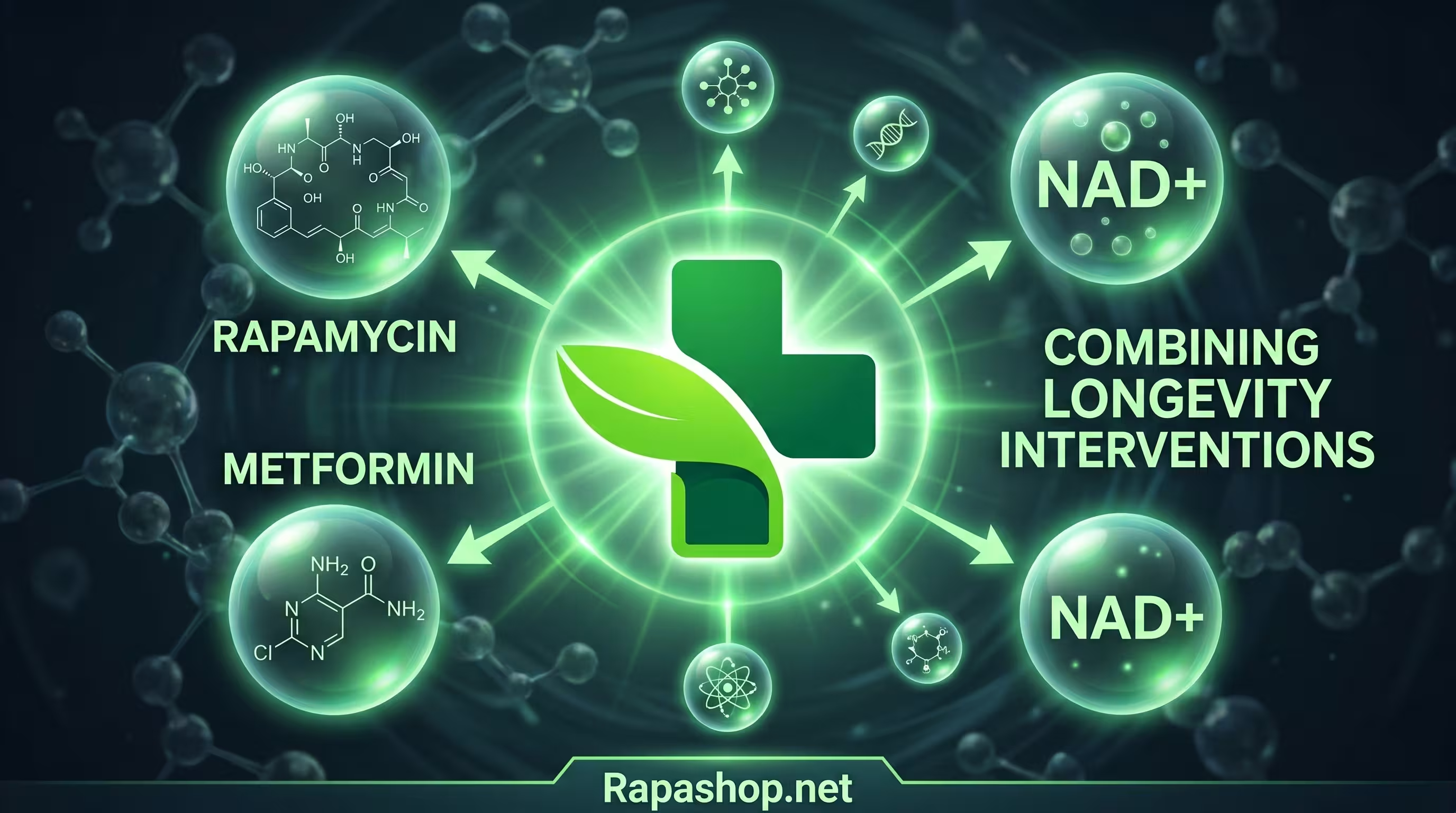
Combining Rapamycin with Other Longevity Interventions: Metformin, NAD+, and More
Researchers now pursue human longevity through synergistic protocols instead of single-drug solutions. These combinations target the complex network of aging hallmarks simultaneously. Rapamycin remains the most effective drug for extending mammalian lifespans. However, real-world users often "stack" it with other interventions. People combine it with metformin, NAD+ precursors, and lifestyle changes. These additions enhance both…

The Bryan Johnson Case: What Went Wrong and What We Can Learn
Bryan Johnson, the tech entrepreneur spending $2 million a year to reverse his biological age, recently shocked the longevity community by announcing a Bryan Johnson Rapamycin reset. For a man who built his entire life around the Blueprint protocol, stopping a foundational longevity drug highlights the volatile nature of extreme biohacking. This decision followed a…
The Ethics of Longevity: Should Healthy Humans Take Rapamycin?
The transition of rapamycin (sirolimus) from a soil-dwelling byproduct of Easter Island to the center of the longevity drug ethical debate represents a paradigm shift in preventive medicine. While this macrolide remains the only pharmacological intervention proven to extend lifespan across nearly all model organisms, its increasing off-label adoption by healthy "biohackers" has ignited a…
Rapamycin Bioavailability: Why Formulation Is the Hidden Variable in Longevity
The pursuit of longevity often leads researchers and self-experimenters to rapamycin, yet many fail to realize that sirolimus bioavailability is not a fixed number—it is a moving target dictated by chemical engineering. While the active molecule remains the same, the vehicle delivering it determines whether you achieve life-extending mTOR inhibition or simply expensive, unabsorbed waste.…
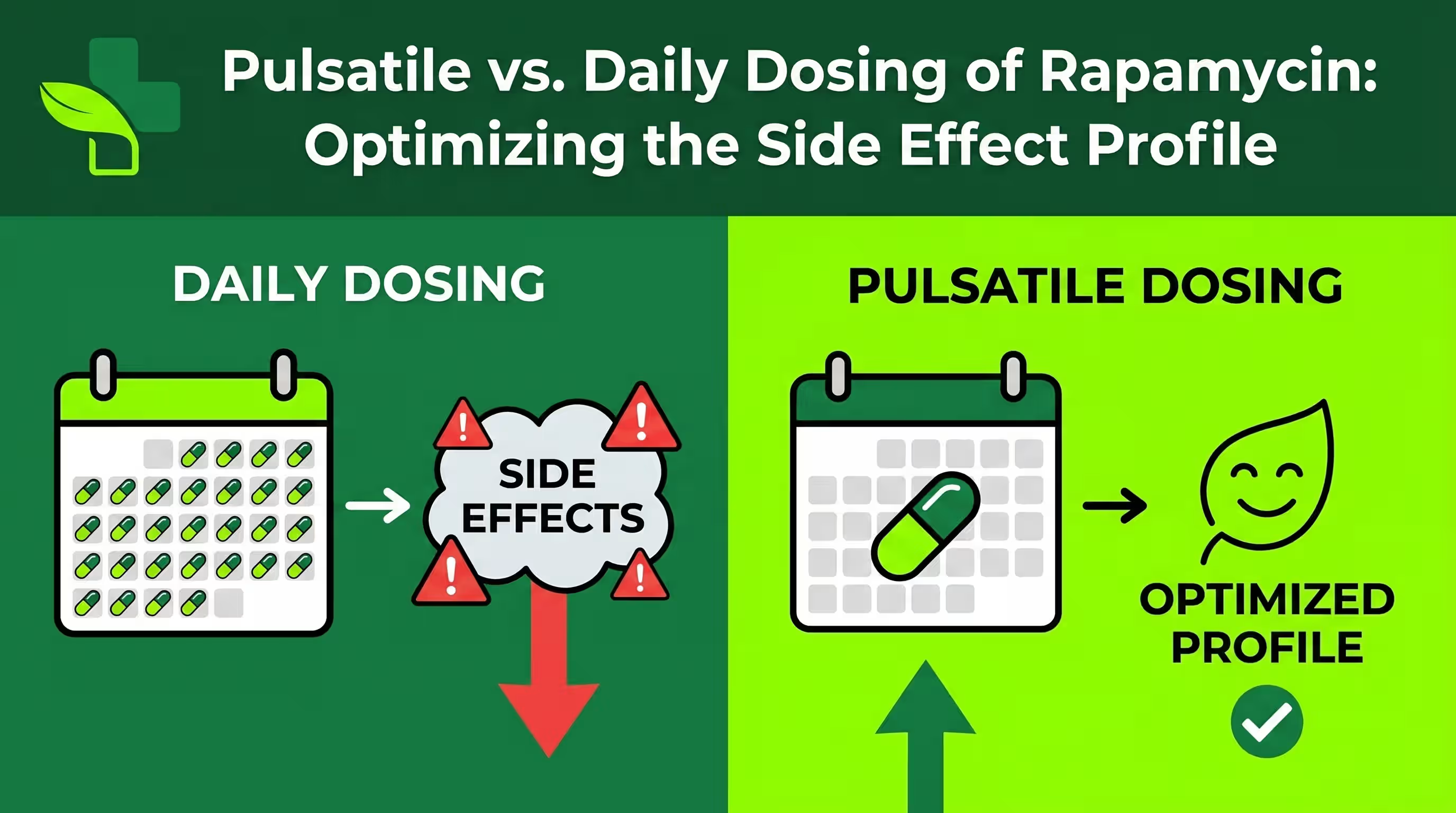
Pulsatile vs. Daily Dosing of Rapamycin: Optimizing the Side Effect Profile
Your body’s metabolism is like a high-performance engine. Over time, it builds up cellular waste or "junk". For decades, researchers sought a biological switch to trigger autophagy. This is a vital self-cleaning mode for cells. Rapamycin is the most promising switch discovered so far. It was originally found in the soil of Easter Island. The…
Rapamycin for Cardiovascular Health: Prevention and Treatment Potential
Cardiovascular disease remains the leading cause of mortality worldwide, with aging serving as the primary risk factor. As we age, the heart and blood vessels undergo progressive changes—including increased arterial stiffness, impaired relaxation (diastolic dysfunction), and a decline in endothelial health—often long before clinical symptoms appear. Rapamycin, an FDA-approved compound originally used in organ transplantation,…