
Rapamycin for Dogs: Efficacy, Dosage, Effects on Life Expectancy and How to Get It
Instead of watching our canine companions succumb to the inevitable decline of age-related disease, the rapidly advancing field of canine geroscience is proactively targeting the biological roots of aging. At the forefront of this movement is a highly targeted pharmacological intervention: using rapamycin to selectively inhibit the mechanistic target of rapamycin (mTOR) pathway. By dialing down mTORC1—the cellular mechanism that keeps an aging dog’s body locked in a maladaptive state of constant growth—rapamycin acts as a metabolic switch, mimicking the cellular benefits of intermittent fasting and triggering the clearance of damaged cellular waste.
The clinical landscape for what is rapamycin for dogs capable of achieving has evolved significantly in recent months. Backed by a renewed five-year, $7 million grant from the National Institute on Aging (NIA), researchers from the Dog Aging Project are currently accelerating the most rigorous longevity trial in history on companion animals. Let’s bypass the basic definitions and dive straight into the latest clinical protocols, the importance of delayed-release formulations, and the definitive data shaping the future of canine healthspan.
Can I get rapamycin for my dog, and where to buy it?
You can get rapamycin for your dog with a valid veterinary prescription. To buy rapamycin for dogs in the hard way, you will need to work with progressive longevity veterinarians, specialized telehealth platforms, or local compounding pharmacies.
While it is legally available for off-label use in veterinary medicine, where to buy rapamycin for dogs matters immensely. Progressive veterinarians prescribe it based on an individual dog’s health profile, including comprehensive bloodwork and cardiac screening.
When sourcing the medication, purity and formulation are critical. Finding an overseas supplier online is cost-effective, but it is important to find supplements that are manufactured in a regulated environment. Generic veterinary supplements may trace contaminants like lead or benzene, which entirely negates the longevity benefits. Furthermore, because a dog’s stomach acid can degrade the active compound, veterinarians typically recommend using acid-resistant capsules or specifically formulated generic tablets (like Rapamune, Rapacan, Siroboon, Zydus) that feature a delayed-release (enteric) coating. Always partner with a specialized longevity vet who can monitor your dog’s liver and kidney values while ensuring the drug survives the digestive journey to effectively engage the mTOR pathway.
What is the recommended rapamycin dog dose?
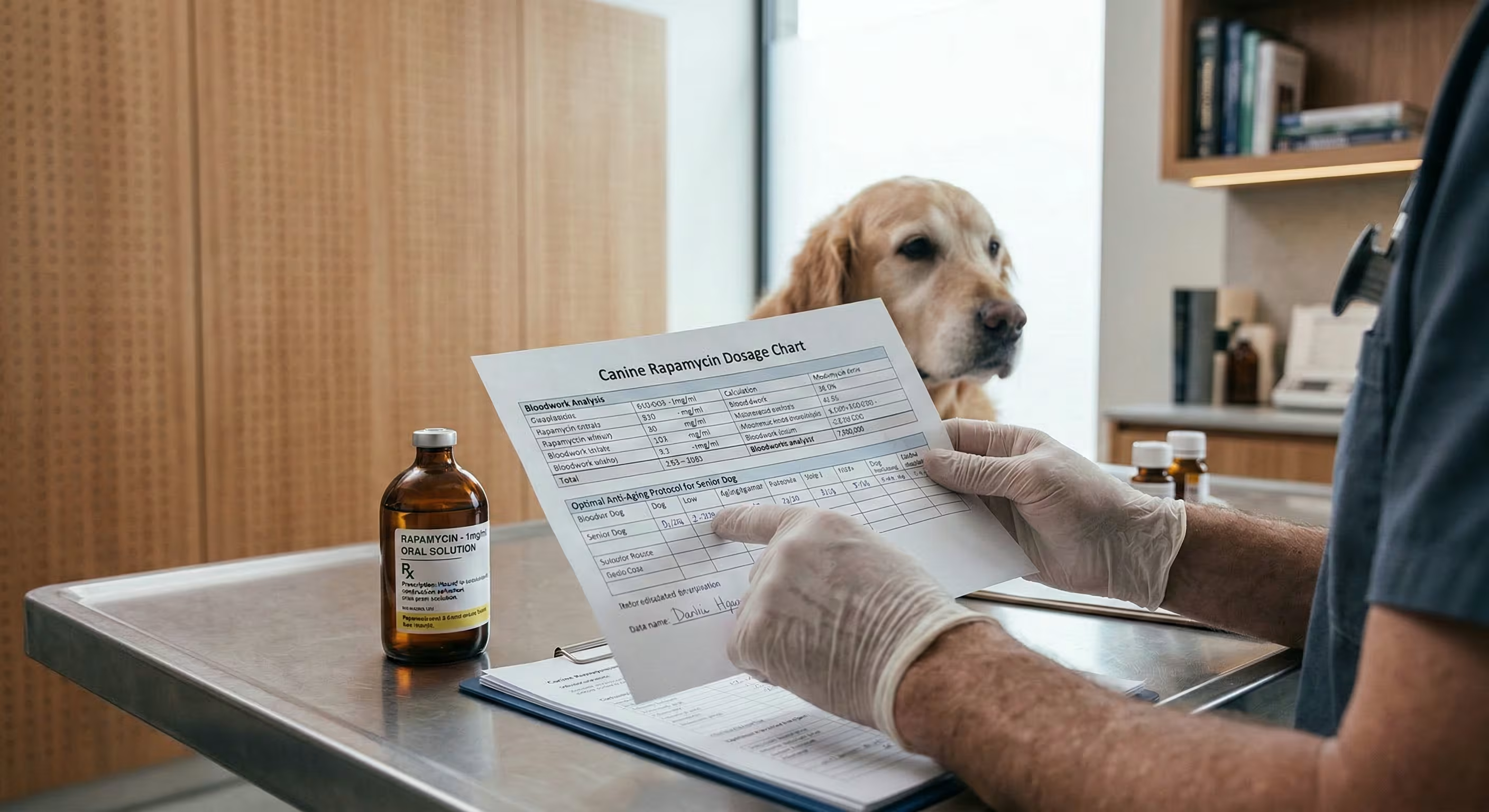
The optimal rapamycin dog dose for longevity typically ranges from 0.1 mg/kg administered three times per week to 0.15 mg/kg given just once weekly. This ultra-low, intermittent dosing strategy successfully dampens the mTORC1 aging pathway while entirely avoiding the immune suppression associated with high-dose, daily administration.
Dosing rapamycin is a precise science rooted in separating the drug’s longevity benefits from its immunosuppressive risks. There are currently two leading protocols utilized in veterinary medicine today:
- The Clinical/UW Protocol: Based on early University of Washington studies, many private longevity clinics prescribe 0.1 mg/kg given three times a week with food. For a 40-44 lb dog, this translates to 2.0 mg given three times weekly. To maximize safety, clinics often utilize a cycling schedule, such as “one month on, one month off,” for general longevity patients.
- The TRIAD / Dog Aging Project Protocol: The massive ongoing clinical trial shifted to a higher dose given less frequently: 0.15 mg/kg administered once weekly. Researchers adopted this change largely for owner convenience and to mimic the natural pulsing of cellular maintenance. For that same 40-44 lb dog, this equals a single 3.0 mg dose per week.
Because pharmacokinetic studies indicate the terminal half-life of orally administered rapamycin in healthy dogs is greater than 60 hours, intermittent dosing allows the drug to sufficiently clear the system, avoiding continuous immune suppression.
What did the University of Washington rapamycin dog study reveal?
The initial University of Washington rapamycin dog study revealed that low-dose rapamycin significantly improved heart function in middle-aged dogs over just 10 weeks. This groundbreaking trial proved the drug was exceptionally safe and paved the way for larger, long-term longevity studies.
If you are looking for hard clinical data on canine rapamycin, the University of Washington’s early trials are the gold standard. In their foundational 10-week study, researchers evaluated healthy, middle-aged companion dogs. They discovered that the dogs receiving rapamycin exhibited measurable improvements in cardiac function. Specifically, the drug helped the heart muscle relax more effectively between beats, a function that typically stiffens and degrades as a dog ages.
These exciting preliminary findings triggered the launch of the TRIAD (Test of Rapamycin In Aging Dogs) study. Supported by a $7 million grant from the National Institute on Aging, TRIAD is a double-blind, randomized, placebo-controlled clinical trial aiming to track hundreds of dogs over a three-year period. TRIAD is rigorously evaluating whether a once-weekly dose of rapamycin can tangibly increase lifespan, prolong cognitive function, and improve overall mobility.
What are the side effects of canine rapamycin?
At low longevity doses, canine rapamycin side effects are incredibly rare and mild. The most common issue is temporary gastrointestinal upset, occurring in roughly 3% of dogs, which typically resolves quickly.
When pet owners hear that rapamycin is used as an immunosuppressant in human organ transplants, they understandably worry about safety. However, the key is the dose. In human transplant medicine, the drug is taken daily at high doses to suppress the immune system via the mTORC2 pathway. For canine longevity, rapamycin is given intermittently at micro-doses, exclusively targeting the mTORC1 pathway.
In the University of Washington’s Phase 1 dog study, the incidence of severe adverse side effects was zero. In larger clinical practice, veterinarians report that roughly 3% to 4% of dogs may experience mild, transient loose stools or minor GI upset as their digestive tracts adapt to the medication. At extremely high doses, rapamycin could theoretically elevate blood glucose levels or cause immunosuppression, which is why dogs with preexisting diabetes or severe liver problems require intense veterinary scrutiny before starting the drug.
How does rapamycin impact cancer and inflammation in dogs?
Rapamycin actively reduces the chronic, systemic inflammation that drives canine joint pain and cognitive decline. Furthermore, because it cuts off the cellular growth pathways that tumors rely on for fuel, it is currently being investigated as an adjuvant therapy to restrict aggressive cancers like osteosarcoma.
As dogs age, they fall victim to persistent, low-grade inflammation driven by senescent cells. Rapamycin acts upstream to clear these dysfunctional cells through autophagy, dramatically lowering systemic inflammation. Owners frequently report rapid decreases in arthritis-related pain and an overall return of youthful vitality.
Beyond joint health, mTOR inhibitors possess powerful anti-proliferative properties. By suppressing the anabolic metabolism that fuels rapid cell division, rapamycin creates a hostile environment for tumor growth. The National Cancer Institute’s Comparative Oncology Trials Consortium (COTC) launched specific, fully-funded trials (such as COTC021) to evaluate orally administered rapamycin in the adjuvant setting for dogs battling aggressive osteosarcoma. While primarily used by owners to extend a healthy lifespan, its ability to simultaneously blunt inflammation and restrict cancer development makes it the ultimate geroprotective tool.
Sample rapamycin dosage by weight table for dogs
Below is a generalized reference table for low‑dose, anti‑aging–style rapamycin in healthy dogs, based on the 0.1 mg/kg 3× weekly and 0.15 mg/kg once‑weekly protocols reported in the literature and community resources.
IMPORTANT: This table is for illustrative and educational purposes only and should not replace a veterinarian’s individualized calculation and monitoring.
| Dog weight (lb) | Approx. weight (kg) | 0.1 mg/kg 3× weekly (total weekly mg) | Approx. mg 3× weekly | 0.15 mg/kg once weekly (per‑week mg) |
|---|---|---|---|---|
| 10–11 lb | ~4.5–5 kg | 1.35–1.5 mg/week | 0.5 mg 3× weekly | 0.75 mg once weekly |
| 20–22 lb | ~9–10 kg | 2.7–3.0 mg/week | 1.0 mg 3× weekly | 1.5 mg once weekly |
| 30–33 lb | ~13.5–15 kg | 4.05–4.5 mg/week | 1.5 mg 3× weekly | 2.25 mg once weekly |
| 40–44 lb | ~18–20 kg | 5.4–6.0 mg/week | 2.0 mg 3× weekly | 3.0 mg once weekly |
| 50–55 lb | ~22.5–25 kg | 6.75–7.5 mg/week | 2.5 mg 3× weekly | 3.75 mg once weekly |
| 60–66 lb | ~27–30 kg | 8.1–9.0 mg/week | 3.0 mg 3× weekly | 4.5 mg once weekly |
Sources: clinically reported ranges and community‑curated dosing tables aligned with Dog Aging Project–style protocols.
How to use this table responsibly
- DO NOT memorize and apply the numbers blindly; instead, calculate from your dog’s exact weight in kg and then round to the nearest available tablet strength.
- If your dog’s weight sits between two lines on the table, choose the lower mg/kg first and titrate up only if tolerated and under veterinary supervision.
- If your dog has kidney disease, liver disease, diabetes, or immune‑mediated illness, a veterinarian may recommend a lower dose or an alternative schedule or decide not to use rapamycin at all.
How veterinarians customize rapamycin by weight and schedule
Veterinarians who use rapamycin in dogs typically follow a risk‑stratified, weight‑based, and schedule‑tailored approach, adjusting mg/kg, frequency, and monitoring intensity based on the dog’s age, comorbidities, and goals (e.g., cancer support vs wellness longevity).
Factors that change the mg/kg sweet spot
A vet might deviate from “standard” tables because of:
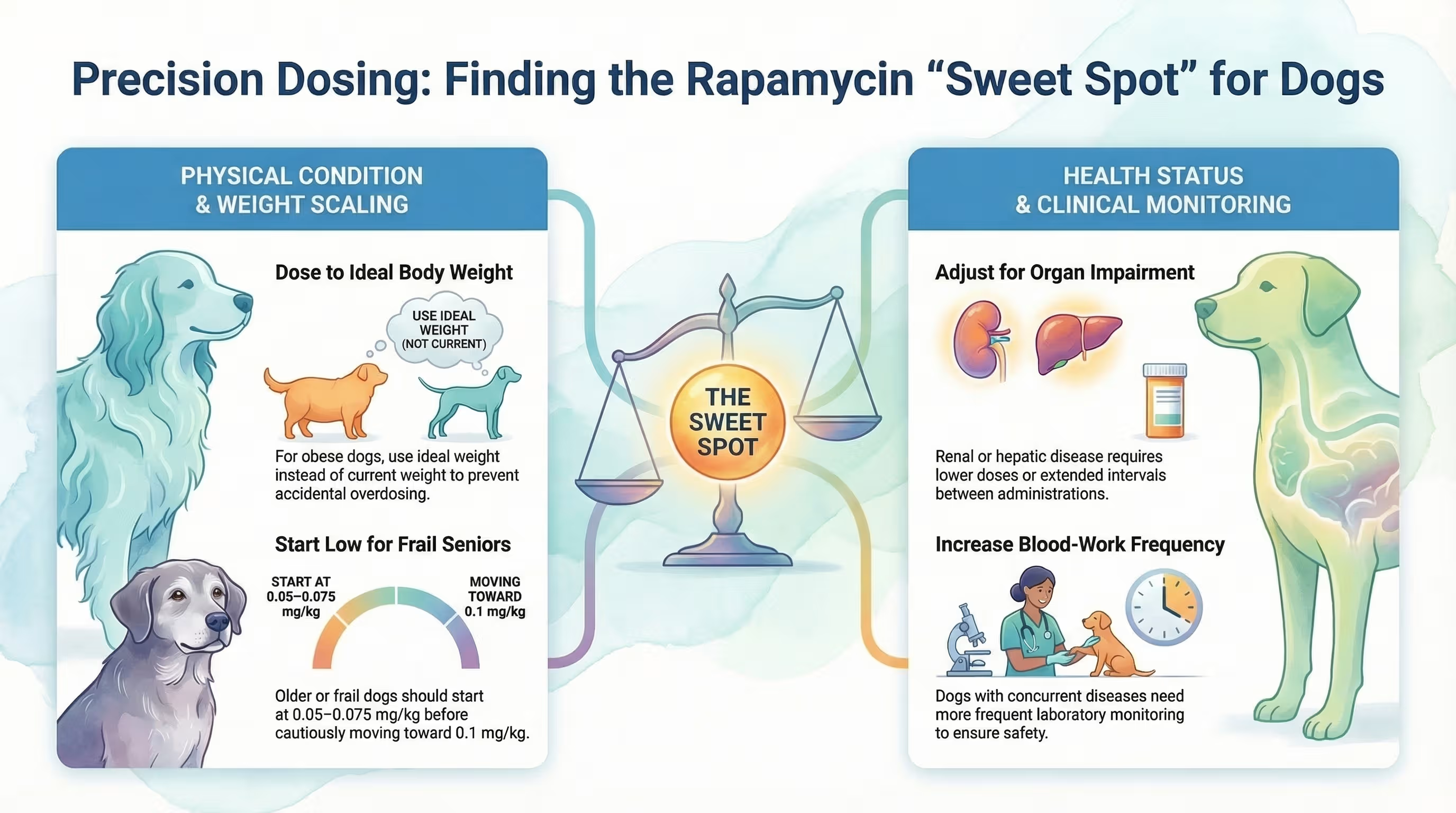
- Age and frailty: older, frail dogs may start at 0.05–0.075 mg/kg and move slowly toward 0.1 mg/kg if tolerated.
- Body condition: obese dogs are often dosed to their ideal body weight, not their current weight, to avoid accidental overdosing.
- Concurrent diseases: dogs with renal or hepatic impairment may receive lower doses or longer intervals between doses, sometimes with more frequent blood‑work monitoring.heroveterinary+1
Why small dogs are extra sensitive
Smaller dogs have a higher metabolic rate per unit mass and a smaller reserve to buffer drug effects, so any miscalculation in mg/kg can be more noticeable.
Owners of toy or small breeds often report:
- slightly more pronounced gastrointestinal discomfort (mild nausea, loose stools) at the same mg/kg dose used in larger dogs, and
- quicker subjective responses to dose reduction or omission of a dose.dogagingproject+1
This is why many veterinary‑oriented guides suggest:
- starting at the lower end of the recommended range (e.g., closer to 0.05–0.075 mg/kg) in tiny dogs or those with comorbidities,
- titrating slowly upward only if the dog tolerates it, and
- compensating with extra hydration and plenty of food when a dose is given.
Real User Experiences: The Proof is in the Paws
Clinical data is vital, but observing the physical transformations in aging dogs illustrates the true value of healthspan extension. Take the famous case of Momo, a 13-year-old Pomsky who was rapidly losing his stamina. Within days of starting rapamycin, his owners noted he could effortlessly run around the yard for hours, keeping up with dogs a third of his age. His canine brother, an 8-year-old Pomeranian named Sherman who had suffered a severe stroke and acute pancreatitis, remarkably regained his ability to eat and walk independently within a week of starting a vet-guided rapamycin protocol.
More recently, participants in the modern TRIAD clinical trials echo these profound improvements. The deep veterinary screening process alone has saved lives: Bill, the owner of a 10-year-old Lab-Rottweiler mix named Zoe, noted that the baseline echocardiogram caught a small heart murmur early, allowing for proactive monitoring. JoAnna, who enrolled an Akita-Rottweiler mix named Madi, discovered her dog had high blood pressure during the screening, which is now being successfully treated. Meanwhile, in the broader longevity community, owners like Kevin Rose have discussed on popular podcasts how their senior dogs—who previously struggled with slipping hips and lethargy—suddenly regained the energy to jump and play after just two months on the drug.
Conclusion
Rapamycin is arguably the most promising geroprotective agent available in veterinary medicine today. By selectively turning down the mTOR pathway, it allows a dog’s cells to clear out toxic waste, reduce chronic inflammation, and protect heart function. While we eagerly await the final lifespan data from the massive TRIAD clinical trial, the current safety profile and immediate quality-of-life improvements make it a compelling option for senior dogs.
If you are tired of simply watching your dog slow down and want to address the root biology of their aging, it is time to have a serious conversation with a longevity-focused veterinarian.

Rapamycin is not specifically FDA-approved for anti-aging in dogs; however, veterinarians can legally prescribe it “off-label” to manage aging, heart disease, and inflammation. It is also currently conditionally approved by the FDA for the treatment of feline Hypertrophic Cardiomyopathy (HCM).
The cost of rapamycin therapy for a dog typically ranges between $50 and $150 per month, depending heavily on the dog’s size, the exact dosage required, and the specific pharmacy used. Overseas suppliers like Rapashop offer affordable medical grade options.
Yes, but it must be properly dosed by a veterinarian. Many longevity clinics utilize generic human tablets because their specialized delayed-release (enteric) coating protects the drug from being destroyed by canine stomach acid.
While many dogs in clinical trials start around age 7 (middle-aged to senior), longevity experts suggest that starting before severe age-related decline accelerates yields the best results. It is never too late to start, but prevention is highly effective.
Resource links
AVMA NEWS: Dog Aging Project enrolling mature dogs for latest phase
Dog Aging Project Receives $7 Million NIH Grant To Expand Clinical Trial Of Anti-Aging Drug
How Do I Get Rapamycin for My Dog?
Dog Aging Project Test of Rapamycin in Aging Dogs (TRIAD)
The Dog Aging Project: Test of Rapamycin in Aging Dogs
What's the Most Effective Rapamycin Anti-Aging Dosage for Pets?
Inside TRIAD: Introducing the Test of Rapamycin in Aging Dogs
CNN: This pill could make your dog (and maybe you) live longer
Test of Rapamycin in Aging Dogs (TRIAD)
TRIAD Tails: Graduate Owners Share Their TRIAD Journey
Rapamycin as a potential intervention to promote longevity and extend healthspan in companion dogs