
Rapamycin vs. Metformin: The 2026 Guide to the “Synergy Stack”
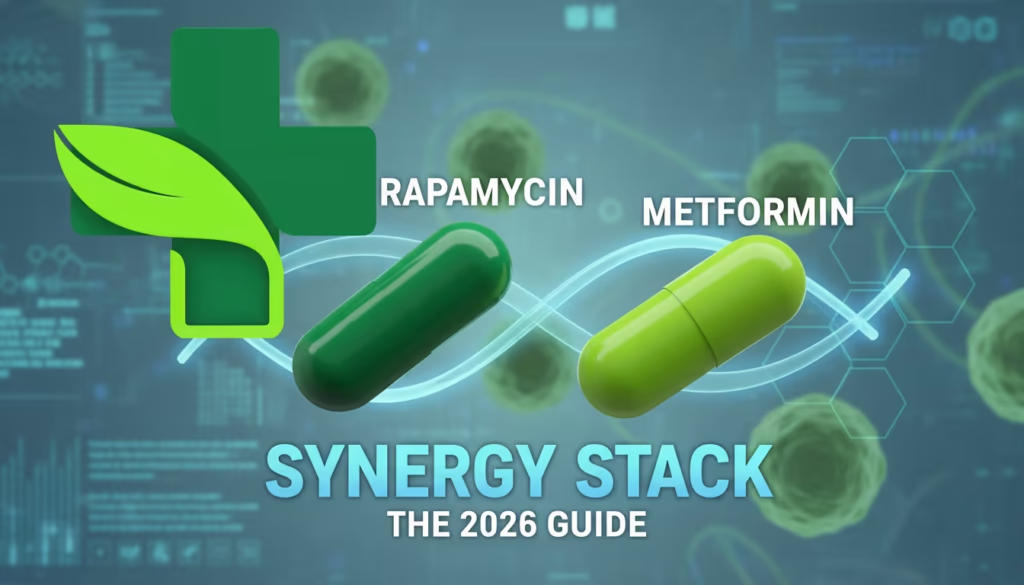
In 2026, the discussion around longevity has moved from “What is the best pill?” to “How do we balance the pathways?”
The debate over Rapamycin vs. Metformin for longevity has reached a turning point in 2026. While both molecules dominated early geroscience discussions, recent meta-analyses and clinical data now distinguish between “fringe benefits” and “fundamental aging” mechanisms. For those optimizing for healthspan, the question is no longer which one to choose, but how to leverage their unique synergy.
For decades, Metformin was the undisputed king of anti-aging. But as we move through 2026, a new hierarchy has emerged. Recent meta-analyses (notably Ivimey-Cook et al., 2025) have clarified that while Metformin is a master of metabolic health, Rapamycin is the only one of the two that consistently mirrors the lifespan-extending effects of caloric restriction in vertebrates.
The most significant trend this year, however, isn’t choosing one over the other—it’s using them as a biochemical counterbalance.
Which longevity drug has the better evidence for lifespan extension?
The Biological Duel: mTOR vs. AMPK
Rapamycin is the clear winner for fundamental lifespan extension in vertebrates, showing consistent benefits across multiple species that mirror dietary restriction. In contrast, Metformin’s evidence for extending life in non-diabetic vertebrates is currently classified as “weak” or inconclusive by major 2025 meta-analyses. While Metformin remains a powerhouse for metabolic health, Rapamycin is the only compound that reliably slows the primary biological drivers of aging.
The 2025 meta-analysis, consisted 911 effect sizes from 167 papers, confirmed that Rapamycin produces a significant lifespan extension comparable to dietary restriction (DR). The study found that Rapamycin acts as a direct inhibitor of the mTOR (mechanistic Target of Rapamycin) pathway, which coordinates cellular growth and somatic maintenance.
Conversely, Metformin failed to show reliable lifespan extension in vertebrates. While it effectively activator of AMPK and improves insulin sensitivity, its effects on the maximum and median lifespan of healthy organisms remain “fuzzy” compared to the robust data for Rapamycin. Expert consensus, including voices like Peter Attia, now views Metformin primarily as a tool for metabolic optimization rather than a primary “longevity drug” for those already metabolically healthy.
The 2026 “Synergy Stack”: The Metabolic Shield
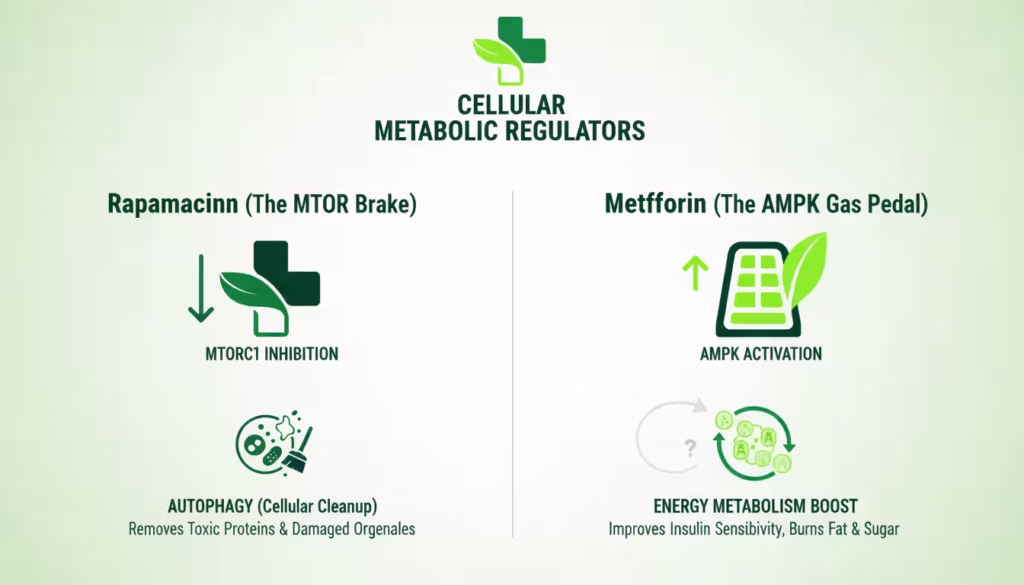
The Rapamycin and Metformin stack works by targeting the mTOR pathway from two different directions: direct inhibition and indirect AMPK activation. This dual approach allows for more potent suppression of unwanted cellular growth while potentially mitigating the metabolic side effects, such as insulin resistance, sometimes caused by Rapamycin alone.
• Direct Action: Rapamycin binds directly to the mTORC1 complex, immediately signaling the cell to enter a state of maintenance and repair (autophagy).
• Indirect Action: Metformin activates AMPK, which then inhibits mTOR signaling from an “upstream” metabolic perspective.
New studies in mice have demonstrated that this combination is superior to either drug alone for weight maintenance and fatty liver prevention. Specifically, Metformin has been shown to alleviate Rapamycin-induced glucose intolerance, effectively “blocking” one of Rapamycin’s most concerning metabolic side effects. For the 2026 “longevity stack,” this synergy offers a more balanced profile: Rapamycin drives the cellular cleanup, while Metformin maintains the metabolic baseline.
The “Metabolic Shield” is a protocol designed to harvest the longevity benefits of Rapamycin while using Metformin to block its primary side effect: dysregulated glucose.
Why the Stack Works
- The Glucose Buffer: Rapamycin can occasionally cause “pseudo-diabetes” by increasing hepatic glucose production. Metformin specifically suppresses this production, keeping your blood sugar stable.
- Mitochondrial Protection: Metformin acts as a mild mitochondrial stressor, while Rapamycin improves mitochondrial quality through mitophagy. Together, they ensure your cellular “power plants” are both efficient and young.
- Inflammation (SASP) Reduction: Both drugs lower systemic inflammation, but they do so via different pathways. Combining them provides a broader “anti-inflammaging” effect.
Can Rapamycin and Metformin treat Long Covid or ME/CFS?
Emerging data from 2025–2026 suggests that Rapamycin’s ability to modulate the immune system and reduce the “cytokine storm” may be effective in reducing the severity of COVID-19 and potential symptoms of Long Covid. By enhancing innate antiviral gene expression and reducing “exhausted” T cells, Rapamycin helps the body clear viral infections more efficiently.
The survey of 333 off-label users found that those who took Rapamycin continuously during a SARS-CoV-2 infection were significantly less likely to experience severe symptoms or develop Long Covid. Researchers speculate that Rapamycin’s anti-inflammatory properties and its role in suppressing the SASP (senescence-associated secretory phenotype) help restore immune homeostasis in those suffering from chronic viral sequelae. Metformin has also shown promise, with retrospective studies indicating a 25% decrease in mortality for hospitalized COVID patients who were already on the medication.
Real-World User Experiences: The Biohacker Perspective
Real-world data from the University of Washington Rapamycin Study provides a window into what users actually feel when taking these compounds off-label.
• Positive Perceptions: 44.7% of users reported their overall health improved since starting Rapamycin. Specific reported benefits included feeling “younger” (37.5%), having more energy (38.7%), and improved brain function (35.4%).
• The “Look Good” Effect: Interestingly, over five times as many users agreed that “family/friends have commented that I look good” than disagreed.
• The Downside: The most common significant side effect of the Rapamycin stack is mouth sores (stomatitis). Other potential issues include hyperlipidemia and transient shifts in blood glucose, which is why many users add Metformin or an SGLT2 inhibitor to the stack.
One user on a popular longevity forum noted: “I started the Rapamycin/Metformin stack in late 2024. The Metformin completely cleared up the weird glucose spikes I was seeing on my CGM after my weekly 6mg Rapa dose. I feel ‘sharper,’ though the occasional mouth ulcer is a nuisance I have to manage with lysine.”
| Category | Metformin | Rapamycin |
|---|---|---|
| Primary Mechanism | AMPK Activator (Indirect mTOR inhibition)1215 | mTORC1 Inhibitor (Direct)811 |
| Lifespan Data | Weak/Inconsistent in vertebrates56 | Robust/Strong (mirrors fasting)56 |
| Best For | Metabolic syndrome, blood sugar1536 | Cancer prevention, cognitive health, immune function1537 |
| Common Dose | 500–1500mg Daily1938 | 3–10mg Once Weekly (Pulsatile)1920 |
| Main Risk | GI Upset, B12 deficiency3539 | Mouth sores, lipid elevation, immunosuppression (at high doses)3440 |
| Cost (Est.) | 4–15 / Month35 | 50–200 / Month38 |
TABLE: Comparative Data: Metformin vs. Rapamycin at a Glance
The 2026 Dosing Protocol (PB Method)
The current clinical trend favors the Pulsatile-Basal (PB) method. This prevents the “numbing” of cellular pathways that occurs with constant dosing.
In 2026, the “Standard Longevity Dose” has moved away from daily administration toward pulsatile dosing to avoid the dangerous inhibition of mTORC2, which can lead to severe insulin resistance and immune suppression.
1. Rapamycin (The Anchor): Most users settle on 6mg once weekly. This “pulse” inhibits mTORC1 long enough to trigger autophagy without permanently crushing the immune system.
2. Metformin (The Metabolic Guard): A common stack includes 500mg–1000mg of Metformin taken on the days surrounding the Rapamycin dose to keep glucose stable.
3. The “Washout” Cycle: Many experts, including those discussed by Peter Attia, suggest cycling Rapamycin (e.g., 8 weeks on, 4 weeks off) to ensure the body does not fully acclimate and to provide a “recovery” period for stem cell turnover.
| Medication | Role | Standard 2026 Dosage | Timing |
| Rapamycin | Longevity Pulse | 5mg – 10mg | Weekly (Single dose) |
| Metformin | Metabolic Basal | 500mg – 1,000mg | Daily (Evening) |
Does Metformin blunt the benefits of exercise?
Yes, high-dose Metformin can blunt some of the physiological adaptations to exercise, including gains in VO2 max and muscle hypertrophy, in non-diabetic individuals. Research indicates that Metformin’s inhibition of complex I in the mitochondria can interfere with the energy signaling required for muscle growth and aerobic improvement.
In the MASTERS trial, Metformin was found to attenuate the exercise-induced increase in whole-body insulin sensitivity and mitochondrial respiration in healthy older adults. Because exercise is one of the few “bona fide” treatments to extend human healthspan, taking Metformin may be counterproductive for those who are already maximizing their “exercise dose”.
In contrast, Rapamycin’s relationship with exercise is more nuanced. While mTOR is technically required for muscle protein synthesis, the PEARL trial (2025) showed that low-dose, intermittent Rapamycin did not impair muscle mass and actually led to gains in some female cohorts.
Many 2026 “super-stackers” on pulsatile dosing, skip Metformin on heavy resistance-training days, to preserve exercise gains, as AMPK activation can slightly blunt the muscle-building (hypertrophy) response.
The Biomarker Checklist: What to Monitor
If you are running this stack, 2026 guidelines recommend tracking these specific markers every 3–6 months:
- HbA1c & Fasting Insulin: To ensure the “Metabolic Shield” is working and your glucose remains stable.
- ApoB / Lipid Panel: Rapamycin can temporarily elevate triglycerides; monitoring allows for dosage adjustment.
- Cystatin C: A more accurate measure of kidney function than creatinine for those on longevity protocols.
- Sirolimus Blood Level (Peak vs. Trough): To confirm your weekly “pulse” is actually clearing your system before the next dose.
Risks and Contraindications
While the stack is synergistic, it is not without risk.
- The “Mouth Sore” Factor: High-dose Rapamycin can cause mouth ulcers (canker sores).
- B12 Depletion: Long-term Metformin use is linked to Vitamin B12 deficiency; supplementation is mandatory in the 2026 protocol.
- Immune Modulation: While low doses rejuvenate the immune system, excessive “stacking” can lead to slow wound healing.
Conclusion: The Verdict for 2026
If your goal is metabolic stability (weight loss, PCOS, pre-diabetes), Metformin is your foundation. If your goal is maximum lifespan extension, Rapamycin is the star. However, for the modern biohacker, the combination represents the most sophisticated toolset we currently have to combat the hallmarks of aging.
The evidence for 2026 is clear: Rapamycin is the heavyweight champion of lifespan extension, but Metformin is its essential metabolic corner-man. While Rapamycin drives the biological heavy lifting of slowing the aging clock, Metformin ensures that metabolic health remains intact during the process.
Key Takeaways:
• Rapamycin mirrors the benefits of dietary restriction more closely than any other drug5.
• Metformin is best reserved for those with metabolic dysfunction or as a tool to mitigate Rapamycin’s side effects316.
• Synergy is real: The combination targets multiple hallmarks of aging simultaneously346.
Yes, many researchers and biohackers use them together (the “Synergy Stack”) because Metformin can help block the elevated blood sugar and insulin resistance sometimes caused by Rapamycin
Current survey data actually shows the opposite; Rapamycin users reported significantly lower rates of depression and anxiety compared to non-users
Metformin activates AMPK which can slightly blunt the muscle-building (hypertrophy) response. “Super stackers” skip Metformin on heavy resistance-training days
Rapashop offers an expedited 10-day delivery, free with every order.
Disclaimer: This post reflects 2026 research trends and should not be taken as medical advice. Always consult with a longevity-trained physician before starting these compounds.
Resource links
Metfօrmin vs Rapamycin Comparison, by Designing Longevity
Rapamycin vs Metformin: A Comparative Anti-Aging Study
Taming expectations of metformin as a treatment to extend healthspan
Metformin activates AMPK and mTOR to Inhibit RANKL-stimulated osteoclast formation
Evaluation of off-label rapamycin use to promote healthspan in 333 adults