

Topics
Articles about Men's Health
What Are the Most Common Rapamycin Side Effects — and How Do You Actually Manage Them?
Rapamycin is currently the most effective known pharmaceutical for extending lifespan and delaying age-related diseases in mammals. While its potential to enhance human healthspan is supported by a growing body of evidence, many users are deterred by fears of adverse events like mouth sores, metabolic shifts, and immune suppression [1] [2]. This authoritative guide breaks…
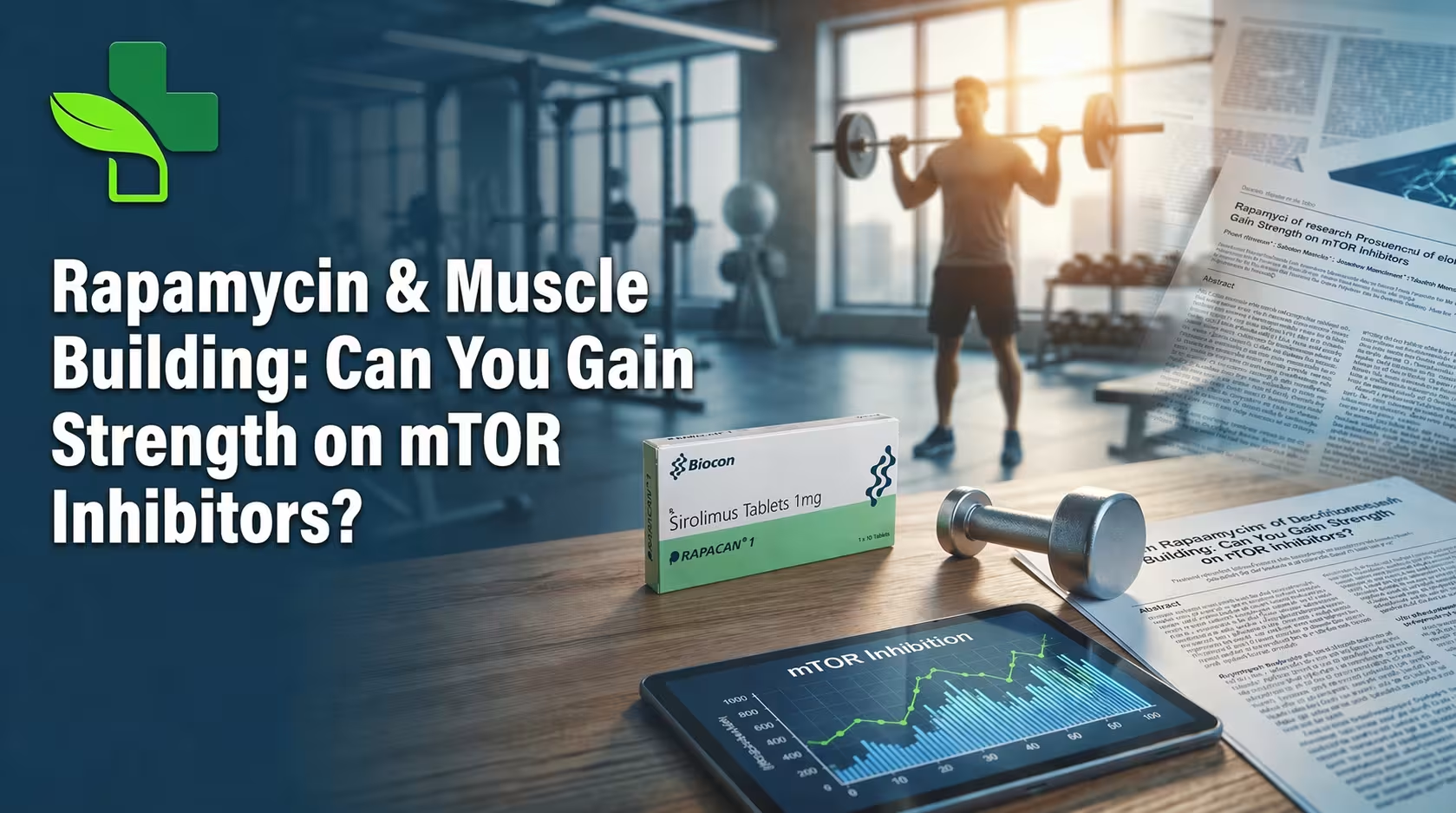
Rapamycin and Muscle Building: Can You Gain Strength While on mTOR Inhibitors?
Recent clinical research highlights a distinction in rapamycin dosing. Chronic high doses can blunt acute protein synthesis. However, intermittent dosing for longevity does not necessarily prevent muscle growth. This is especially true when paired with consistent resistance training. Individuals should understand the nuance between acute inhibition and long-term adaptation. This knowledge allows them to balance…
Does Rapamycin Affect mTORC2 and Why Is That Dangerous?
Rapamycin inhibits mTORC1 rapidly but can disrupt mTORC2 with prolonged or high exposure, potentially leading to insulin resistance, immune suppression, and endothelial damage—serious risks for longevity seekers. Intermittent low dosing minimizes mTORC2 impact while preserving benefits like autophagy induction. Experts like Peter Attia and Matt Kaeberlein advocate pulsed protocols to balance these effects. How Does…
Rapamycin vs. Metformin: The 2026 Guide to the “Synergy Stack”
In 2026, the discussion around longevity has moved from "What is the best pill?" to "How do we balance the pathways?" The debate over Rapamycin vs. Metformin for longevity has reached a turning point in 2026. While both molecules dominated early geroscience discussions, recent meta-analyses and clinical data now distinguish between "fringe benefits" and "fundamental…

Real People Taking Rapamycin: 6-Month Experience Reports
For many in the longevity community, the six-month mark is the "Gold Standard" milestone. It is the point where the initial placebo effects fade, and the real biological data—from lipid panels to biological age clocks—begins to tell a definitive story. While clinical trials like the ERAP trial for Alzheimer’s and the Kraig et al. study…
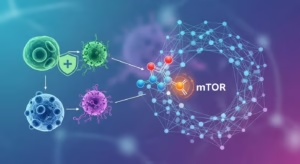
Rapamycin and Cancer Prevention: The mTOR Connection
For many people interested in living longer, the goal is simple: avoid the "Big Four" diseases of aging. At the top of that list is cancer. Modern science is moving away from just treating cancer after it appears and toward Rapamycin and cancer prevention as a way to stop the disease before it even starts.…
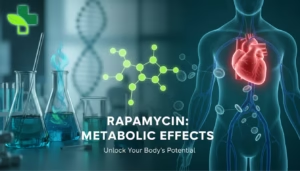
Rapamycin and Metabolic Effects: Blood Sugar, Cholesterol, and What to Monitor
Rapamycin and Metabolic Effects: Blood Sugar, Cholesterol, and What to Monitor The pursuit of human longevity has transitioned from speculative "elixirs" to the rigorous science of geroprotection, with the mechanistic target of rapamycin (mTOR) pathway serving as a central hub. While Rapamycin is the most robust pharmacological intervention for extending lifespan in model organisms, its…
Rapamycin Dosing for Longevity: Complete Beginner’s Guide
Navigating the landscape of geroprotectors requires a shift from traditional disease treatment to proactive biological optimization. Rapamycin dosing for longevity has moved beyond theoretical mouse models and into the clinics of specialty practitioners, yet the transition from a daily transplant drug to an intermittent anti-aging protocol requires precision to maximize autophagy while avoiding metabolic pitfalls.…
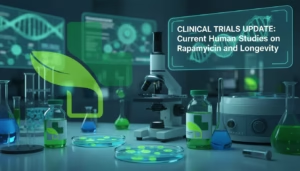
Clinical Trials Update: Current Human Studies on Rapamycin and Longevity
For decades, the search for a true "longevity pill" was considered more science fiction than science. However, the discovery of the mTOR pathway and its inhibition by a soil-derived molecule called rapamycin has shifted that perspective. While animal studies have long shown that rapamycin can extend lifespan by up to 60%, the question of whether…