

Rapamycin and Muscle Building: Can You Gain Strength While on mTOR Inhibitors?
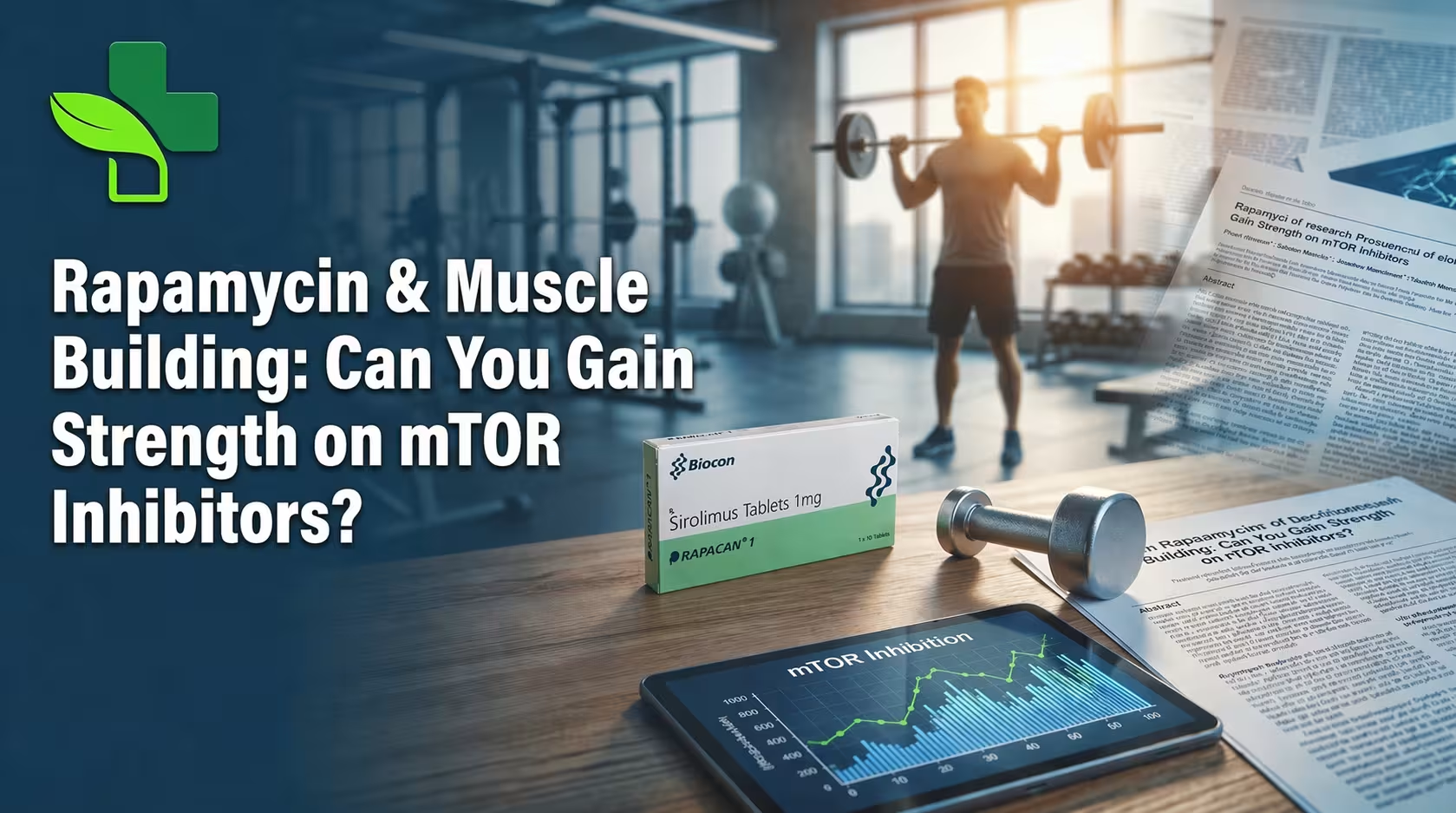
Recent clinical research highlights a distinction in rapamycin dosing. Chronic high doses can blunt acute protein synthesis. However, intermittent dosing for longevity does not necessarily prevent muscle growth. This is especially true when paired with consistent resistance training. Individuals should understand the nuance between acute inhibition and long-term adaptation. This knowledge allows them to balance geroprotective effects against the anabolic response to physical performance.
The mTOR Paradox: How Rapamycin Impacts Muscle Protein Synthesis
The Mechanistic Target of Rapamycin (mTOR) is the central command center for cellular growth. It integrates signals from nutrients, growth factors, and mechanical loading to drive muscle protein synthesis. Rapamycin is a potent and specific inhibitor of this pathway. Its impact on muscle mass remains a paradox. In aging, mTORC1 hyperactivation is actually linked to muscle loss. Therefore, targeted inhibition might occasionally protect muscle quality rather than destroy it. This mTOR Pathway allows the body to switch between periods of cellular cleanup (autophagy) and periods of intense anabolic growth.
mTORC1 Inhibition and the Acute Contraction Response
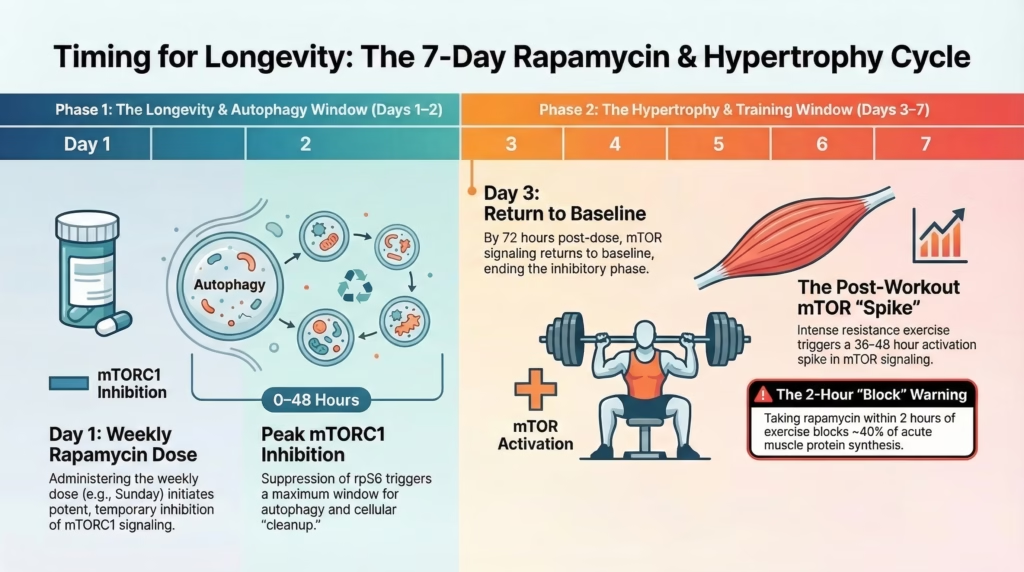
Acute administration of rapamycin in humans blocks the early (1–2 hour) increase in skeletal muscle protein synthesis that high-intensity resistance exercise typically triggers. In a landmark study, subjects received rapamycin before muscle contractions. This caused a ~40% blunting of the anabolic response compared to a control group. The drug works by preventing the phosphorylation of key targets like S6K1 and eEF2. Because this process inhibits mTORC1, athletes should prioritize specific administration timing for recovery.
Is Anabolic Resistance a Risk with Sirolimus?
Research indicates that sirolimus, or rapamycin, has a paradoxical relationship with anabolic resistance. The drug acutely induces resistance by blocking growth signals. However, it may also serve as a therapeutic tool. It could potentially reverse chronic anabolic resistance in aging populations.
Acute Pharmacological Anabolic Resistance
In healthy individuals, the mTOR inhibitor rapamycin induces a temporary state of anabolic resistance by directly suppressing the anabolic response to growth stimuli.
The Aging Paradox: Reversing Resistance
In the context of sirolimus for longevity, the drug is often viewed as a treatment for anabolic resistance, rather than a cause of. Rapamycin can help mitigate muscle from atrophy and loss of muscle quality by reducing mitochondrial oxidative stress in the elderly.
- Rescuing Muscle Quality: Rapamycin acts as a geroprotective agent that rescues muscle quality and prevents age-related atrophy by inhibiting this chronic overactivation. In aged rats, enteric rapamycin treatment improved grip strength by up to 60% and slowed the decline in aerobic capacity.
- Dampening Hyperactivation: Aging muscle is often characterized by a chronic, low-grade hyperactivation of mTORC1. This persistent activity contributes to mitochondrial oxidative stress and inhibited autophagy. It also leads to muscle fiber damage. Together, these factors represent the hallmarks of age-related anabolic resistance.
Can You Build Muscle on Rapamycin? Intermittent vs. Daily Dosing
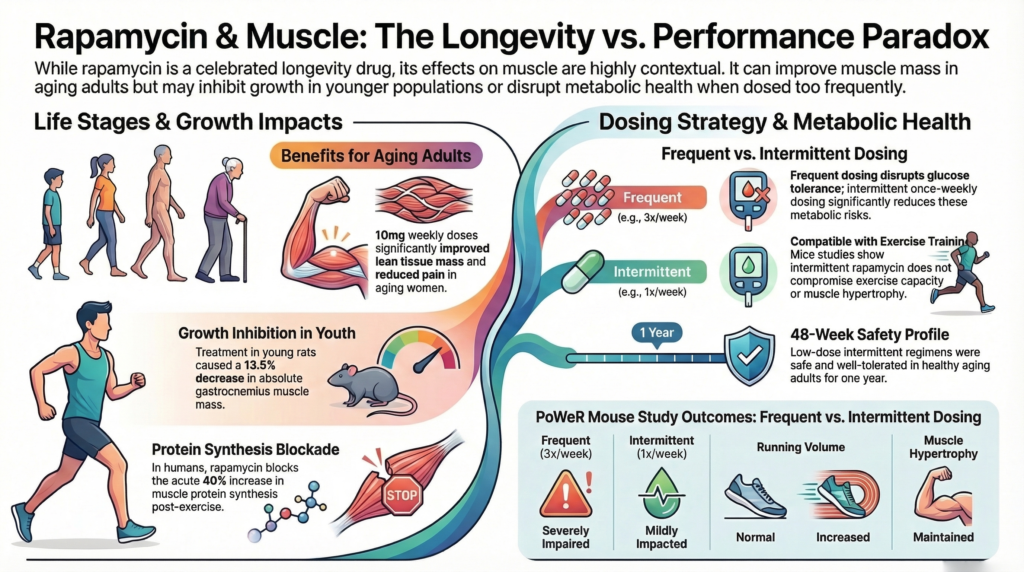
The dosing schedule is the most significant factor in determining the outcome of rapamycin and muscle growth. Current evidence shows the drug’s impact depends on stimulus type. It also varies based on the specific dosing regimen used. Intermittent rapamycin protocols allow for a “recovery window.” This gap lets mechanical loads activate mTOR normally. Such timing preserves the body’s ability to build functional tissue. In contrast, daily administration carries higher risks. It is more likely to interfere with muscle adaptations and glucose metabolism.
How does Intermittent Dosing Protect Muscle Building Process?
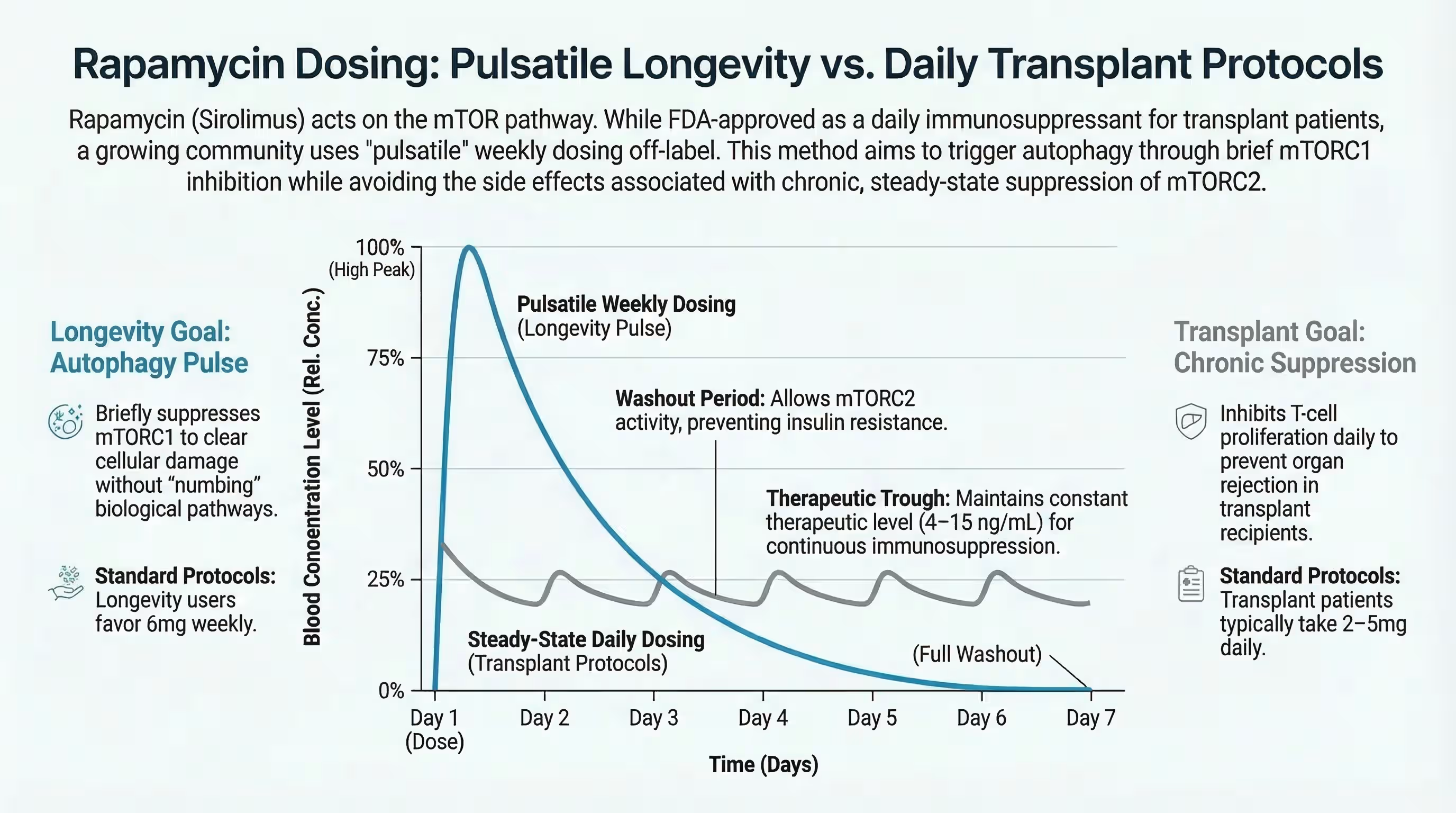
A weekly dose provides a transient “pulse” of inhibition. This is followed by a period of normal signaling. In contrast, daily administration can lead to unintended disruption of mTORC2. This complex is crucial for insulin signaling and muscle health. Intermittent dosing primarily benefits cellular signaling by creating a “recovery window.” This schedule keeps muscle tissue sensitive to mechanical stress. Such sensitivity is essential for maintaining hypertrophy and strength.
Using an intermittent rapamycin dosing strategy is key for many people. It helps balance sirolimus for longevity while preserving muscle mass and strength. This pulsatile dosing method aims to avoid permanent suppression of the mTORC1 complex. This complex is sensitive to the inhibitor rapamycin. It also serves as a master regulator of the anabolic response.
Lessons from PoWeR: Progressive Weighted Running and Rapamycin
Studies used the progressive weighted wheel running (PoWeR) model. These showed that chronic resistance-type exercise drives significant muscle growth. This hypertrophy occurred even when rapamycin was present. Researchers found that mice performing PoWeR while receiving rapamycin still achieved significant increases in muscle fiber size and physical performance. This suggests that mechanical loading can activate “rapamycin-insensitive” pathways to maintain growth. This study provides strong evidence that resistance training adaptations on sirolimus are not only possible but can be robust if the training stimulus is sufficiently intense.
Summary of PoWeR Findings for 2026
| Adaptations to PoWeR | Effect of Vehicle | Effect of Intermittent Rapa | Effect of Frequent Rapa |
|---|---|---|---|
| Absolute Grip Strength | Increased | Increased | Increased |
| Myofiber Hypertrophy | Increased | Increased | Increased |
| Glucose Tolerance | Improved | Partially Impaired | Significantly Impaired |
| Adiposity Loss | Significant | Significant | Blunted |
| Exercise Capacity | Increased | Increased | Increased |
Collectively, these lessons suggest that rapamycin intermittent dosing muscle strategies are the most viable approach for those seeking to maximize both healthspan and physical strength.
Rapamycin vs. Caloric Restriction: Which is Better for Muscle Retention?
While both rapamycin vs caloric restriction muscle mass strategies extend lifespan, they have divergent effects on the molecular landscape of the muscle. Caloric restriction usually lowers body weight and muscle mass. In contrast, rapamycin can protect muscle quality in certain aging models. This treatment also improves grip strength.
While both rapamycin and caloric restriction (CR) extend lifespan and improve body composition, they impact muscle tissue through distinct biological pathways.
- Current research suggests that rapamycin vs caloric restriction muscle mass comparisons favor rapamycin for maintaining absolute muscle mass in adults.
- Rapamycin and CR are both highly effective at improving relative muscle mass by reducing fat mass more significantly than lean tissue.
Protecting Myofiber Size During Longevity Protocols in older age?
Rapamycin helps maintain myofiber size by reducing chronic mTORC1 hyperactivation. This “leaky” signaling often leads to protein degradation and oxidative stress in aging muscle. By restoring a youthful balance of protein turnover, rapamycin can “rescue” skeletal muscle. This protects against the progressive damage and fiber loss seen in sarcopenia. This specific mechanism ensures the “floor” of muscle retention is significantly elevated. While the “peak” of growth may be slightly lower, muscle preservation is improved during the aging process.
Synergistic Effects: Combining Rapamycin with Resistance Training
Evidence shows a synergistic potential between rapamycin and exercise. This is especially true for chronic conditions and aging populations. The drug provides systemic longevity benefits. Meanwhile, exercise “rescues” the muscle from potential metabolic side effects.
Research indicates that resistance training can mitigate certain issues. It helps manage glucose intolerance and insulin resistance caused by rapamycin. Simultaneously, the drug prevents excessive inflammation. This protection ensures that inflammation does not hinder long-term recovery.
The current scientific consensus supports the combination of rapamycin and resistance training. This approach promotes healthy longevity.
Optimizing Your Performance While Taking Rapamycin, Practical Steps
To gain strength and muscle mass on a Rapamycin protocol, you must manage three key areas. First, focus on dosing frequency by using intermittent dosing schedules. Second, maintain high intensity during your resistance training sessions. Finally, prioritize nutrition by ensuring a high quality, protein-rich intake.
Strategic Dosing to Minimize Side Effects
The most critical factor in optimizing performance is the dosing schedule. Rapamycin intermittent dosing is typically done once weekly. This method is superior to daily administration. It allows for a transient window of mTOR suppression for longevity benefits. Meanwhile, it provides enough time for signaling to recover. This recovery supports your anabolic responses to exercise.
Tailoring Your Training Protocol with Rapamycin Intake
You can build muscle while on mTOR inhibitors by engaging pathways that bypass pharmacological blocks. Performance optimization relies on alternative growth drivers. These include the MAPK pathway and mTORC2 signaling. The transcription factor c-Myc can also drive hypertrophy. These mechanisms effectively compensate for mTORC1 inhibition.
Nutritional Synergy: Overcoming Anabolic Resistance
Aging often leads to anabolic resistance. This makes muscles less sensitive to growth signals. Rapamycin can help reverse this state in older adults. However, it might induce temporary resistance in younger individuals. For older adults, the ideal protein distribution supports muscle health. This helps overcome anabolic resistance using an even distribution pattern. You should consume consistent, moderate amounts of high-quality protein at each meal. This strategy maximizes the anabolic potential of every feeding window.
Rapamycin studies suggest a total daily protein intake of 1.2 to 1.6 g/kg/day, to maximize muscle protein synthesis.
Grip Strength and Contractile Function: What the Data Says
Long-term studies on older subjects show that rapamycin can significantly increase grip strength. It also slows the age-related decline in maximal running distance. Acute doses might temporarily dampen the “pump” or immediate protein synthesis. However, a cleaner cellular environment often improves long-term muscle contractile function. This data proves rapamycin supports quality of life by improving skeletal muscle health.
When is the best time to take your dose relative to your gym sessions?
Rapamycin blocks the acute increase in muscle protein synthesis for several hours after contraction. Because of this, avoid dosing within 24–48 hours of your most intense growth-focused workouts. Create an “exercise window” where the drug is at its trough levels during heavy lifting days. This timing allows for maximal mTORC1 activation when it matters most. This strategy utilizes the drug’s half-life to your advantage. It ensures rapamycin and exercise work together rather than in opposition.
| Dosing Strategy | Impact on Acute MPS spike | Long-term Hypertrophy | Metabolic Side Effects |
|---|---|---|---|
| Pre-Workout (Acute) | Blocked by ~40% | Limited Data | Transient |
| Frequent (Daily/3x wk) | Persistently Suppressed | Partially Blocked (~50%) | High (Glucose Intolerance) |
| Intermittent (Once Weekly) | Transiently Suppressed | Highly Compatible | Minimized/Reduced |
Side Effects: Glucose Intolerance and Muscle Quality
What are the metabolic risks of rapamycin, and how do they impact your muscle?
One notable rapamycin side effect is a potential increase in blood glucose levels. This can lead to systemic insulin resistance. If left unmanaged, these issues negatively impact muscle quality. These disruptions often stem from “off-target” inhibition of mTORC2. This second complex is vital for insulin-mediated glucose uptake in the muscle. This specific risk highlights the need for a better protocol. It should prioritize metabolic flexibility alongside muscle growth.
Monitoring Insulin Sensitivity During Strength Cycles
While rapamycin is compatible with strength gains, chronic or frequent rapamycin dosing can lead to significant side effects, including glucose intolerance and insulin resistance. Intermittent dosing alleviates the glucose disruptions typically caused by frequent or daily rapamycin use.
By monitoring fasting glucose users can adjust their dosing frequency to ensure that their muscle cells remain sensitive to insulin.
The Role of mTORC2 in Long-Term Muscle Health
mTORC2 is a cornerstone of long-term muscle health. It regulates metabolic integrity, cell survival, and structural organization. Longevity research often focuses on inhibiting mTORC1 with rapamycin. However, preserving mTORC2 function is essential. This avoids severe side effects like decreased muscle growth. It also protects overall contractile function.
mTORC2 is a critical regulator of the Akt pathway and GLUT4 translocation, meaning its suppression can lead to “starving” the muscle of the glucose it needs for intense performance. The pulsed” protocols are superior; just because they provide enough of a break for mTORC2 to remain functional, and to support long-term muscle integrity.
Summary: Balancing Longevity and Hypertrophy
Balancing longevity and muscle growth requires navigating the “mTOR Paradox.” This concept identifies rapamycin as an anabolic suppressor. However, it also acts as a geroprotective agent for aging muscle. Traditional scientific dogma viewed these goals as incompatible. Current research now shows they can be harmonized. This is achieved through strategic dosing and physical activity.
Balancing longevity and hypertrophy is best achieved by:
- Monitoring insulin sensitivity
- Utilizing intermittent rapamycin dosing
- Engaging in high-volume voluntary exercise
- Maintaining high-quality protein intake (1.2–1.6 g/kg/d)

Yes, resistance training is highly recommended as it helps mitigate potential side effects like glucose intolerance and can activate rapamycin-insensitive growth pathways.
Chronic, daily high doses can interfere with growth, but intermittent (weekly) doses combined with exercise have been shown to protect and even improve muscle quality in aging models.
No. It is generally advised to avoid taking rapamycin immediately before or after exercise, as it can block the acute “spike” in muscle protein synthesis required for recovery.
In older animal models, rapamycin has been shown to increase grip strength and physical endurance by improving the overall cellular health of the muscle tissue.
Rapamycin intermittent dosing (once weekly) is generally preferred to minimize metabolic side effects like glucose intolerance while remaining compatible with muscle hypertrophy and strength gains.
Yes. In aged models, rapamycin has been shown to protect against atrophy and improve absolute grip strength by reducing chronic mTORC1 hyperactivation and oxidative stress.
Unlike CR, which causes an initial loss of absolute muscle mass, rapamycin treatment in adult mice did not cause a loss of absolute muscle quantity compared to controls.