
What’s Next for Rapamycin? Inside the New Age of Longevity Research
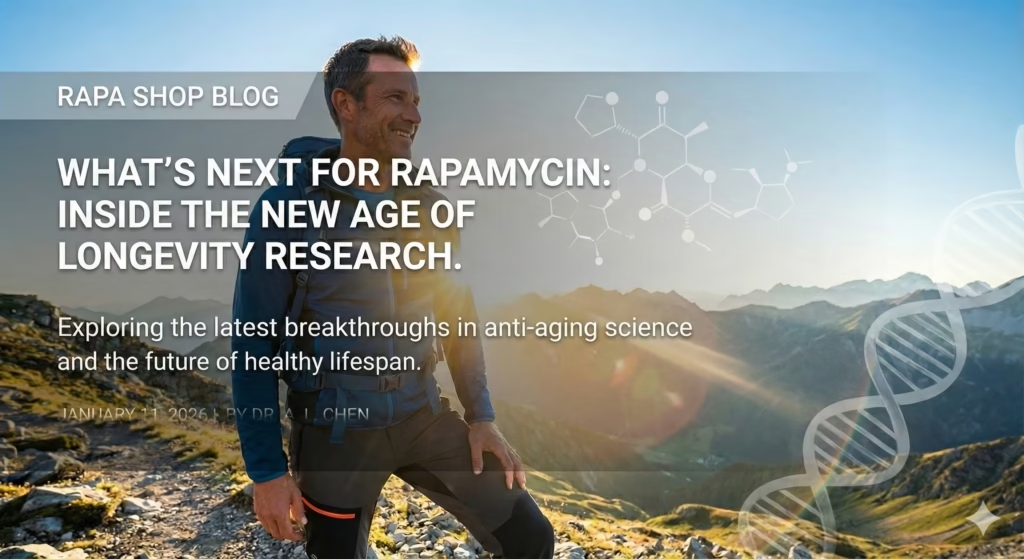
From brain health to personalized medicine, new studies are expanding how rapamycin could shape the next era of longevity science. Here’s what researchers are exploring next.
Beyond What We Already Know
For years, rapamycin has been the molecule everyone talks about in longevity science — but what comes next might be even more exciting.
The first wave of research focused on animals and transplant medicine. Now, scientists are entering a new phase: understanding how rapamycin for improving human healthspan could reshape healthy aging, not just lifespan.
Readers who want a deeper foundation can explore what science is discovering about healthy aging and how rapamycin and mTOR may act as a hidden switch controlling aging.
We’re moving from theory to precision — from “Does it work?” to “How do we make it work best for different people?”
For background, see Is Rapamycin an Effective Longevity Drug? and Can Rapamycin Really Help You Live Longer?.
Rapamycin for Brain Health and Cognitive Longevity
One of the most promising areas of rapamycin research is neuroprotection. This includes work on rapamycin for brain health, rapamycin for neuroprotection, and rapamycin for cognitive longevity.
Related research:
– Does rapamycin protect neuron cells?
– Rapamycin and the future of healthy aging
Scientists are exploring whether low-dose rapamycin could help preserve brain function, delay Alzheimer’s progression, or support cognitive clarity in aging adults.
For readers interested in broader scientific discoveries, see The Youth Pill: Shocking Scientific Discoveries About Rapamycin.
Preliminary data from small human studies already suggest subtle improvements in memory and mental stamina, especially when paired with healthy lifestyle interventions.
This marks an important shift — from adding years to life, to protecting the quality of those years.
Rapamycin for Metabolic Balance and Energy Regulation
Another focus of upcoming research is rapamycin’s impact on metabolic health.
Scientists are now investigating rapamycin for metabolic health as they explore how it influences insulin sensitivity and mitochondrial efficiency.
For broader metabolic context, see Rapamycin mimics the effects of caloric restriction.
By supporting more efficient energy regulation, rapamycin might help the body manage energy more effectively, potentially supporting long-term weight stability and glucose balance.
Readers exploring weight or metabolic applications may find Off-label rapamycin use: from longevity to weight loss relevant.
Future studies aim to define where the sweet spot lies — the dosage and timing that boost metabolism without tipping into over-inhibition of mTOR.
Combination Therapies: The Synergy Frontier
Researchers are no longer viewing rapamycin in isolation. Instead, the focus is shifting toward synergistic longevity strategies — combining rapamycin with:
• Metformin
• NAD+ boosters
• Intermittent fasting
For science behind combinations, see:
– Drug combination found to extend lifespan by 30%
– The powerful duo of rapamycin and trametinib
This multipathway approach may represent the future of anti-aging medicine.
For readers interested in pet studies, see rapamycin for pets along with:
– Rapamycin pet heart health study
– Can Rapamycin slow aging in dogs?
– Is Rapamycin a key to extended pet life?
Personalized Longevity: The Smart Medicine Era
Perhaps the most visionary work ahead involves personalized rapamycin protocols.
Scientists are developing AI-based models and biomarker tracking tools to optimize individual dosage, cycling frequency, and response monitoring.
Those exploring personalized biological theories can read Mikhail Blagosklonny’s Hyperfunction Theory and mTOR’s role in aging.
This direction aligns with the goal of maximizing rapamycin for improving human healthspan while ensuring safety and personalization.
For women’s longevity, see:
– Can Rapamycin delay menopause?
– Rapamycin in 2025: Women’s health findings
– Study suggests rapamycin could extend fertility by 5 years
In the coming decade, taking rapamycin could look less like self-experimentation — and more like precision healthcare guided by continuous feedback.
A New Chapter in Longevity Science
What’s happening with rapamycin right now feels like the beginning of a new era.
The curiosity that once drove a handful of researchers is now shaping an entire global field.
To explore the foundations of current research, read Rapamycin and the future of longevity and Rapamycin: The secret of longevity.
Rapamycin may have started as a drug — but it’s becoming a framework for reimagining healthy aging.
Every era of science has a molecule that defines its spirit of discovery. For longevity, that molecule may be rapamycin.
Its story isn’t finished — it’s only evolving. And what lies ahead may transform not only how long we live, but how deeply we understand the biology of aging itself.
Resource links
Rapamycin in Aging – Comprehensive Review (Kaeberlein, 2021)
Mannick et al. — mTOR Inhibitors in Older Adults (Immunity & Healthspan)
Barshop Institute Human Pilot Study (Heart & Vascular Function, 2025
Dog Aging Project – Rapamycin Trials (Model for Healthspan Research)
Rapamycin & Brain Health (Neuroprotection Studies)