
What are the best longevity supplements available for purchase? A Data-Driven Review (2026)
The quest to slow biological time is no longer fringe science; it’s a multi-billion dollar industry. Walking into a pharmacy or scrolling online presents a dizzying array of pills and powders claiming to extend healthspan. But when you strip away the marketing, the question remains: What are the best longevity supplements actually supported by clinical data?
While no pill replaces the foundational tetrad of exercise, nutrition, sleep, and emotional health, specific compounds have demonstrated legitimate mechanisms in targeting the hallmarks of aging. Here we will try to move beyond the hype to analyze the current evidence—from peer-reviewed human trials to expert consensus—highlighting which interventions warrant consideration and, which may carry hidden risks.
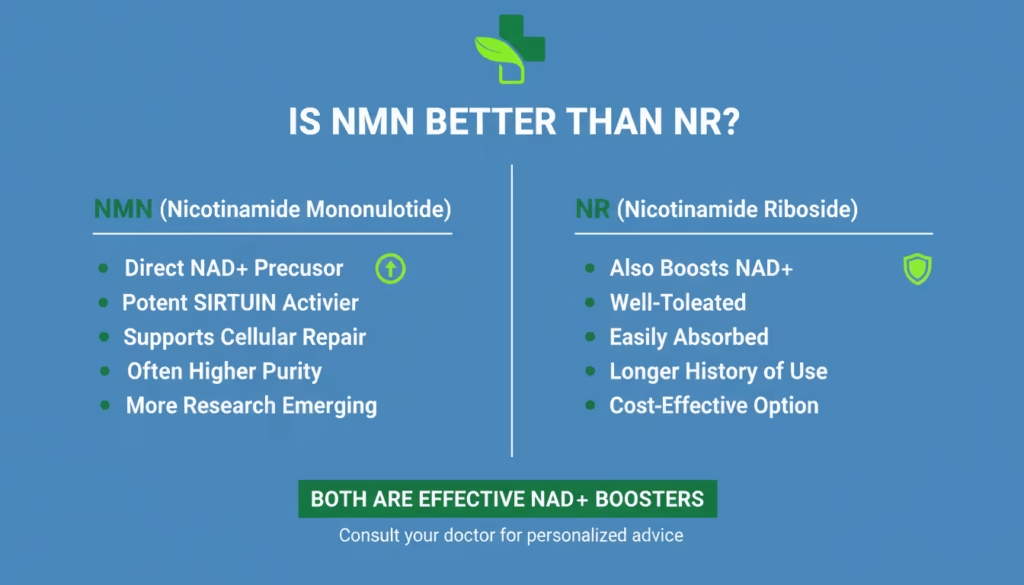
Do NAD+ Precursors Like NMN and NR Actually Reverse Aging?
Based on the most recent systematic review of human trials, NAD+ precursors like Nicotinamide Riboside (NR) and Nicotinamide Mononucleotide (NMN) effectively raise blood levels of NAD+, but their clinical effectiveness for anti-aging outcomes remains inconclusive. They are generally safe and well-tolerated, but expecting dramatic rejuvenation from oral forms may currently be premature.
The Mechanism vs. The Reality
NAD+ is a critical coenzyme required for thousands of metabolic reactions, and its decline with age is well-documented. The logic behind supplementation is sound: boost the raw material to fuel sirtuins (proteins that regulate cellular health) and DNA repair enzymes.
However, a PRISMA-guided systematic review published in Ageing Research Reviews (2026) analyzed 33 human intervention studies. The findings? While oral NR and NMN consistently showed “biochemical target engagement” (meaning NAD+ levels went up in the blood), the downstream effects on metabolic, vascular, and functional outcomes were “heterogeneous and often null or endpoint-specific“. This means your blood work might look better, but you might not feel like you’re 20 again.
The “Liver Trap” Hypothesis and Expert Skepticism
Experts like Peter Attia, MD, have voiced skepticism regarding oral administration. In a widely circulated discussion, Attia suggested that oral NR or NMN is largely taken up by the liver, which metabolizes it rather than distributing it to other tissues that need it most. He noted, “I am completely unconvinced that taking supplemental NR -or even NMN- by mouth, is doing anything other than enriching the companies that make those things,” pointing to data suggesting that for years, the belief was that only the liver could utilize these precursors effectively.
User Sentiment and the Parenteral “Hack”
Despite the lukewarm clinical data, user anecdotes, particularly regarding injectable forms, are overwhelmingly positive. On biohacking forums, users report profound effects from intramuscular NAD+ injections.
“I use NAD+ injections. I can tell a big difference in energy… I’ve had chronic fatigue most of my life and it honestly helps my energy levels so much.”
Another user described near-instantaneous relief from chronic knee and shoulder pain post-injection. This divergence highlights a critical gap in the research: the systematic review found “no eligible outcomes trials evaluating intravenous or intramuscular NAD+ itself for anti-aging,” meaning the strong anecdotal benefits lack rigorous RCT (Randomized Controlled Trial) confirmation.
Can Vitamin D and Omega-3s Really Slow Biological Aging?
High-quality, large-scale randomized controlled trials, including the landmark VITAL study, confirm that daily Vitamin D (2000 IU) and Omega-3 (1,000 mg) supplementation can slow biological aging. Vitamin D was shown to reduce telomere attrition, while the combination of Omega-3s and Vitamin D slowed biological aging by approximately 3-4 months over three years.
The VITAL Trial: Telomeres and Epigenetics
The VITamin D and OmegA-3 TriaL (VITAL) is a massive study involving over 25,000 participants, providing the highest level of evidence for these nutrients.
- Vitamin D: A 2025 analysis from VITAL found that 2,000 IU of vitamin D3 per day significantly decreased leukocyte telomere length (LTL) attrition. Over four years, the supplement group saved approximately 140 base pairs of telomere length compared to placebo. Telomeres are the protective caps on your chromosomes; slower erosion is a hallmark of delayed cellular aging.
- Omega-3s: While the same study found that 1g of marine Omega-3s (fish oil) did not significantly impact telomere length, other analyses tell a different story. A separate study published in Nature Aging using DNA methylation clocks (a different measure of biological age) found that taking Omega-3s alone slowed aging, and combining Omega-3s with Vitamin D and exercise reduced the risk of invasive cancer by 61% and pre-frailty risk by 39%.
The Safety Profile and Dosage
Unlike experimental compounds, these are well-understood nutrients. However, “more” is not always better.
- Omega-3s: High doses (above 4g) can have blood-thinning effects. Experts like Peter Attia emphasize tracking the Omega-3 Index (a measure of EPA/DHA in red blood cells) to ensure therapeutic levels are reached, rather than just guessing.
- Vitamin D: Toxicity is rare but possible with extreme megadoses. The 2,000 IU dose used in VITAL is generally recognized as safe and effective for most adults.
| Supplement | Key Finding | Clinical Context |
|---|---|---|
| Vitamin D3 | Reduced telomere attrition by 140 bp over 4 years | VITAL RCT (n=25,000+) |
| Omega-3 (EPA/DHA) | Slowed epigenetic aging clocks; synergistic with Vitamin D | Nature Aging sub-study |
What Are the Emerging “Heavy Hitters” in Longevity (Rapamycin, Nucleotides, Urolithin A)?
Compounds like exogenous Nucleotides, Urolithin A, and Spermidine are moving from preclinical models to human data. Nucleotides recently showed a striking 3-year reduction in DNA methylation age in just 19 weeks. However, Rapamycin, despite potent effects in animals, remains a prescription drug with limited funding and clinical studies on longevity, due to being an open patent drug, only recognized as a “supplement” by biohackers and health enthusiasts.
Nucleotides (TALENTs Study)
Forget NAD+ for a moment; new data points to dietary nucleotides as a potent geroprotective intervention. The TALENTs study, a 19-week double-blind RCT in older adults (60-70 years), tested 1.2g/day of nucleotides.
- The Result: The nucleotide group showed a significant reduction in median DNA methylation age (a measure of biological aging) of -3.08 years compared to placebo.
- Metabolic Benefits: The study also found significant improvement in insulin sensitivity (HOMA-IR). This is a groundbreaking finding as it targets both the epigenetic clock and metabolic health simultaneously.
Rapamycin: The Elephant in the Room
Longevity scientist Matt Kaeberlein, PhD, frequently discusses Rapamycin, a drug that inhibits the mTOR pathway and has consistently extended lifespan in animal studies. Kaeberlein notes its impact on senescent cells (aged “zombie” cells that refuse to die) and inflammation.
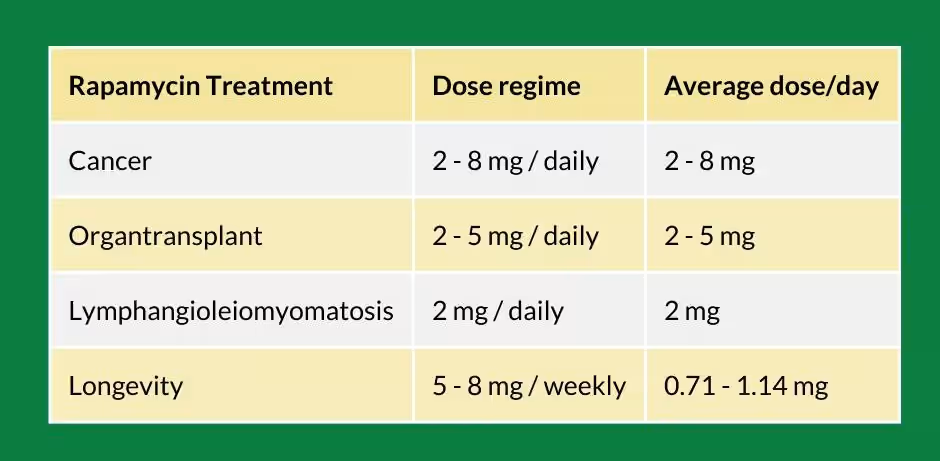
- The Caveat: Rapamycin is a potent prescription drug used clinically to prevent organ transplant rejection. Organ transplant patients experienced side effects, including immune suppression and metabolic disturbances, in accordance with the doses they are subject to. However, the dosing profile for longevity is documented to be well-tolerated among the longevity community.
Urolithin A and Spermidine
- Urolithin A: A metabolite of ellagitannins (found in pomegranates), it promotes mitophagy—the cleanup of dysfunctional mitochondria. Kaeberlein lists it among the compounds that “may increase lifespan” based on preclinical models.
- Spermidine: This compound promotes autophagy (cellular cleansing). Kaeberlein explicitly states, “Spermidine is an autophagy booster,” making it a candidate for clearing out cellular debris associated with aging.
Which “Longevity” Supplements Should You Avoid or Approach with Caution?
Several popular supplements touted for longevity are claimed to carry risks that may outweigh their unproven benefits. It is always a good idea, to study the brand and source of the supplement, to understand the risk/benefit scheme, and get necessary blood tests, for a safe supplementation profile.
In a MDLinx article the following claims are made for some supplements; Resveratrol (high doses) cause liver toxicity and interacts with blood thinners. Ashwagandha (with prolonged or high dose use) has been linked to cases of liver injury, and Collagen supplements may contain heavy metal contaminants.
The Resveratrol Reality Check
Resveratrol, the compound in red wine, is often hailed as a sirtuin activator. However, physicians warn that the evidence is largely based on animal studies. Courtney Scott, MD, notes that high doses can “interact with medications or cause liver toxicity”. It inhibits CYP enzymes (crucial for drug metabolism), posing a risk for those on statins or blood thinners.
Ashwagandha and Liver Injury
Ashwagandha, an adaptogenic herb, is popular for stress reduction. However, with global use comes increased pharmacovigilance. Reports of liver injury, including cholestatic hepatitis, have emerged. As internist Tatiana Echeverry, MD, emphasizes, before starting such supplements, one must be aware of baseline chronic conditions, particularly liver or kidney disease -6.
Collagen: The Unregulated Market Problem
A recurring concern from experts is contamination. Because the supplement market is loosely regulated, products may not contain what is on the label. This is particularly true for animal-derived products like collagen, which carry a risk of heavy metal contamination.
Conclusion
The landscape of longevity supplements is rapidly evolving, shifting from folk remedies to data-driven interventions. The “best” supplements are those with the strongest clinical support for safety and efficacy. Vitamin D and Omega-3s stand on the firmest ground, backed by massive RCTs showing impacts on telomere length and epigenetic age. Nucleotides represent a thrilling new frontier with impressive short-term epigenetic reversal -2. Conversely, the evidence for NAD+ precursors is mixed; they work biochemically, but the clinical benefits are still under investigation.
Before adding any new compound to your regimen—especially high-dose or experimental ones—consult a healthcare provider who practices “Medicine 3.0.” They can help you interpret blood biomarkers (like your Omega-3 Index or vitamin D levels) to ensure you’re taking the right supplement, for the right reason, at the right dose.
Based on current data, neither has proven superior for clinical anti-aging outcomes in humans. Both effectively raise blood NAD+ levels, but the translation to improved healthspan remains inconclusive. Some research suggests that the liver primarily metabolizes these precursors, potentially limiting systemic effects
Some supplements show promise in modifying biomarkers of aging. For example, the TALENTs study showed nucleotide supplementation reduced DNA methylation age by about 3 years over 19 weeks. However, “reversal” is a strong term; we are currently better at slowing age-related decline than reversing it entirely.
The VITAL study observed significant differences in telomere attrition over a 4-year period, suggesting that long-term, consistent supplementation is key for cellular aging benefits. Acute effects are unlikely.
While no supplement is a magic bullet, Vitamin D (especially for those with low levels) and Omega-3 fatty acids (EPA/DHA) are the closest to universal recommendations due to widespread deficiencies and robust safety data supporting their role in cardiometabolic and brain health.
Rapashop offers an expedited 10-day delivery, free with every order.
Resource links
The Two Metrics Most Significantly Associated with Longevity
Longevity Scientist: Fasting, Supplements & Tools for Aging Well w/ Matt Kaeberlein, PhD
4 longevity supplements that actually do more harm than good
Recent Study Shows Omega-3s & Vitamin D Slow Biological Aging
Scrutinizing Supplements: Creatine, Fish Oil, Vitamin D, and More