
Real People Taking Rapamycin: 6-Month Experience Reports

For many in the longevity community, the six-month mark is the “Gold Standard” milestone. It is the point where the initial placebo effects fade, and the real biological data—from lipid panels to biological age clocks—begins to tell a definitive story. While clinical trials like the ERAP trial for Alzheimer’s and the Kraig et al. study on healthy elderly provide a framework, the most nuanced insights often come from “n=1” biohackers documenting their rapamycin experience reddit style.
This report synthesizes real-world data from hundreds of users alongside recent clinical findings to show what actually happens when you inhibit mTOR for half a year.
What are the most common Rapamycin 6-month results reported by users?
After six months of weekly dosing, most users report significant improvements in physical stamina, sleep quality, and a reduction in chronic joint pain. However, these benefits are frequently paired with a measurable “spike” in LDL cholesterol and triglycerides that requires active management.
Detailed user logs from communities like r/Rapamycin and r/Biohackers reveal a consistent pattern. One 49-year-old user reported dropping 9 lbs within a month of starting 5mg weekly, noting that even a “bad diet” during the pandemic didn’t lead to the expected weight regain, which they attributed to the drug’s metabolic effects. Another 53-year-old user noted that their sleep quality, as recorded by a Garmin device, averaged a score of 91 after six months—the best in over a year—while their resting heart rate dropped significantly.
On the flip side, the “six-month wall” is where rapamycin side effects often manifest in bloodwork. A 46-year-old male taking 10mg weekly reported that while he felt no negative physical symptoms, his total cholesterol jumped to 255 and LDL rose to 173. This highlights a critical reality: rapamycin often makes you feel younger while your internal metrics suggest a temporary metabolic shift.
Can Rapamycin reduce your biological age in six months?
Yes, multiple users utilizing the Levine Phenotypic Age spreadsheet and Aging.ai have documented 3-to-5-year reductions in biological age after six months of therapy. These reductions are typically driven by improvements in albumin levels and the red cell distribution width (RDW).
In the biohacking community, “biological age clocks” are the primary tool for validation.
• Case A: A user reported that their biological age, measured by Aging.ai, dropped from 47 to 40 after six months, specifically citing improvements in hemoglobin and MCV.
• Case B: A 46-year-old user noted an epigenetic age drop from 40 to 35 on the Levine test spreadsheet after six months of 10mg weekly dosing.
Even in clinical settings, a model of the Kraig et al. trial data using the PhenoAge clock suggested a theoretical net change of -3.96 years in biological age compared to a slight increase in the placebo group.
What happens to cholesterol and blood sugar after six months of Rapamycin?
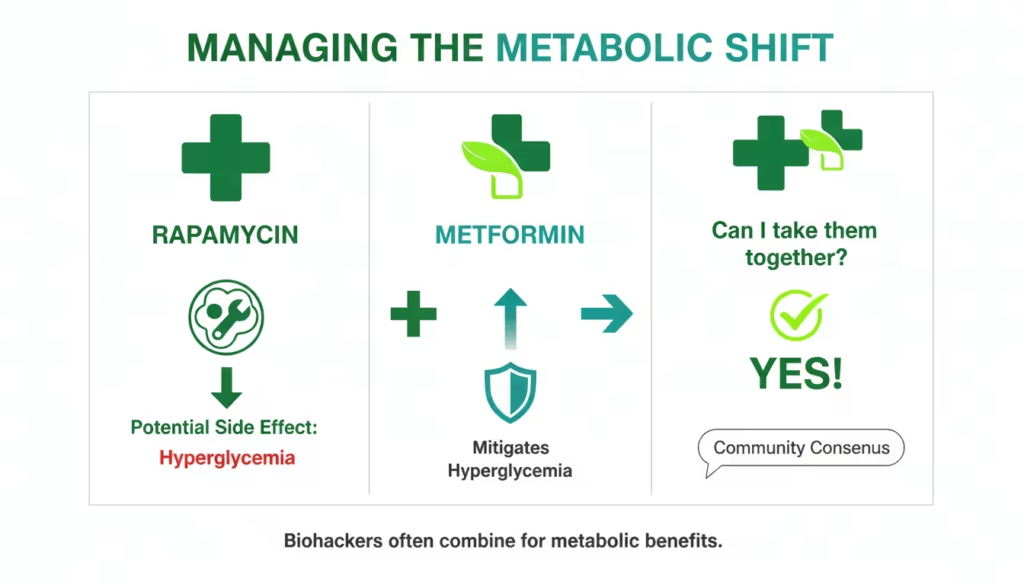
Rapamycin frequently triggers a rise in blood lipids and a state known as “benevolent pseudo-diabetes,” characterized by elevated HbA1C and fasting glucose. While often reversible, this requires close monitoring of insulin sensitivity.
A common concern in rapamycin user reviews is the impact on glucose. One 32-year-old athletic male reported his HbA1C reaching pre-diabetic levels after four months of pulsing 8mg every 12 days. Longevity researchers like Dr. Mikhail Blagosklonny argue that this is “starvation pseudo-diabetes”—a benevolent shift where the body mimics a fasted state to preserve glucose for the brain.
Does Rapamycin cause side effects like mouth sores or infections over 6 months?
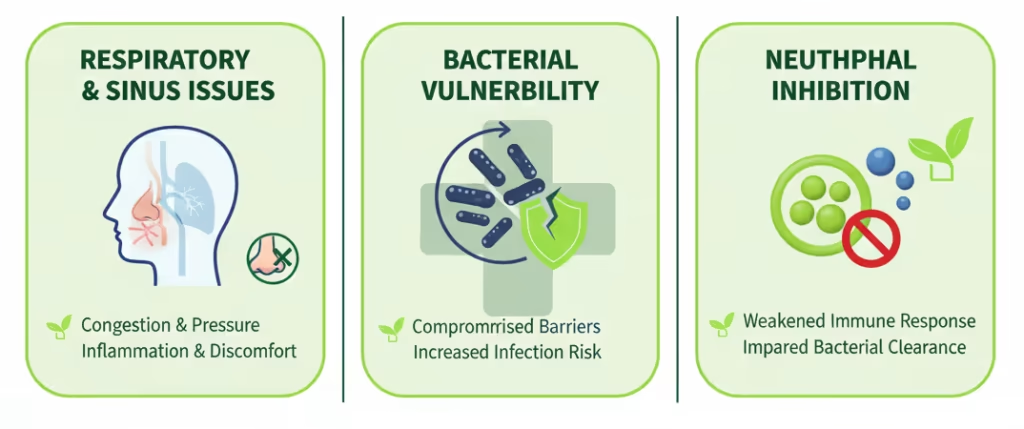
While low-dose rapamycin is often used for its immunomodulatory effects to rejuvenate the immune system in the elderly, prolonged or high-dose usage can lead to partial immunosuppression. Early indicators often involve a shift in how the body handles common pathogens:
Respiratory and Sinus Issues: Users and clinical trial participants have documented a higher incidence of upper respiratory tract infections, sinusitis, and pneumonia.
Bacterial Vulnerability: There is a documented risk for urinary tract infections (UTIs) and specific bacterial complications like tooth infections or erythema migrans.
Neutrophil Inhibition: Rapamycin can inhibit neutrophil function, which may not just lead to more frequent infections, but also increased severity of bacterial infections when they do occur.
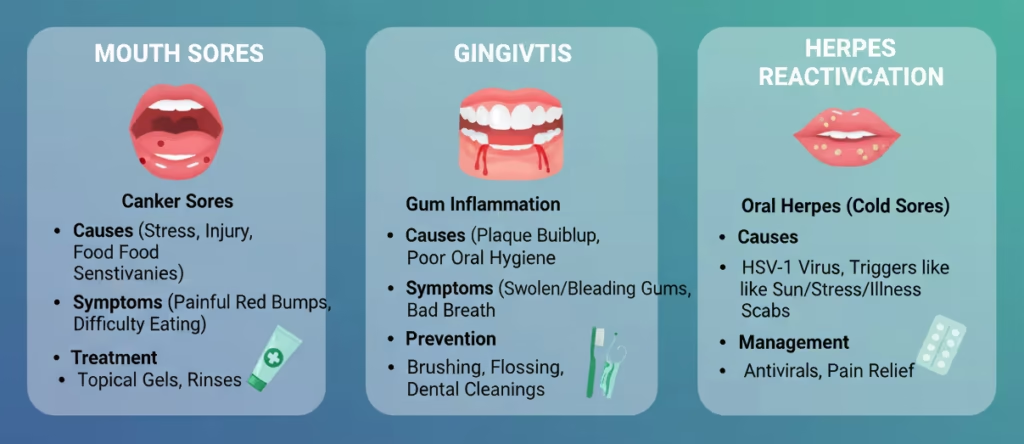
Mouth Sores and viral oral mucosa problems are the early signs of partial immunosuppression to watch for, indicating the mTOR2 inhibition.
Aphthous Ulcers (Mouth Sores): These are the most prevalent side effects reported in clinical studies, occurring in 4% to 17% of users depending on the dose. Recurring episodes or sores that are “hard as heck to get rid of” often indicate the dose is high enough to inhibit mTORC2, leading to reduced survival pathways in the skin and mucous membranes.
Gingivitis and Herpes Reactivation: Some studies have noted increases in gingivitis and the appearance of herpes-like vesicles, suggesting that latent viruses may begin to flourish if the immune system is sufficiently suppressed.
In a 6-month report from the r/covidlonghaulers community, a user taking 5mg weekly noted that while rapamycin “saved their life” by eliminating fatigue, they began getting sick with lung and opportunistic infections whenever they attempted to run. This suggests that while rapamycin can be an immunostimulant in the short term by reversing T-cell exhaustion, prolonged use might prevent immune cells from proliferating, leading to a weaker system.
How is Rapamycin administered for longevity purposes?
Most “real-world” users follow a “hit and run” protocol of 5mg to 10mg once per week. This dosing schedule is designed to inhibit mTORC1 (the growth pathway) while allowing the drug to “wash out” enough to avoid chronic inhibition of mTORC2 (the survival pathway).
Bioavailability: Commercial vs. Compounded
A recent study by compared generic rapamycin (commercial) with compounded rapamycin versions. The results showed that while both are bioavailable, compounded rapamycin is approximately 31% as bioavailable as the commercial version per milligram.
Conclusion
Six months of rapamycin is a journey of trade-offs. The rapamycin results for most involve a leaner body, a “sharper” mind, and a lower biological age, but these are balanced against the need to manage rising cholesterol and the risk of mouth sores.
The consensus among real users is clear: rapamycin before and after metrics are meaningless without regular blood testing. If you are considering this path, ensure you are monitoring your lipid panel, HbA1C, and insulin levels every 3 months.
The data is conflicting. Some long-COVID users report it helped them escape cycles of depression/grief, while a study of young men reported increased self-reported anxiety.
Most users and doctors (like Dr. Alan Green) recommend taking it in the morning because it can be stimulatory and interfere with sleep if taken too late.
While anecdotal reports of hair repigmentation exist, the evidence is stronger for ocular health. Animal studies and some user reports suggest rapamycin promotes autophagy in the lens, potentially slowing cataract progression, though high-dose studies in mice showed an increase in cataracts.
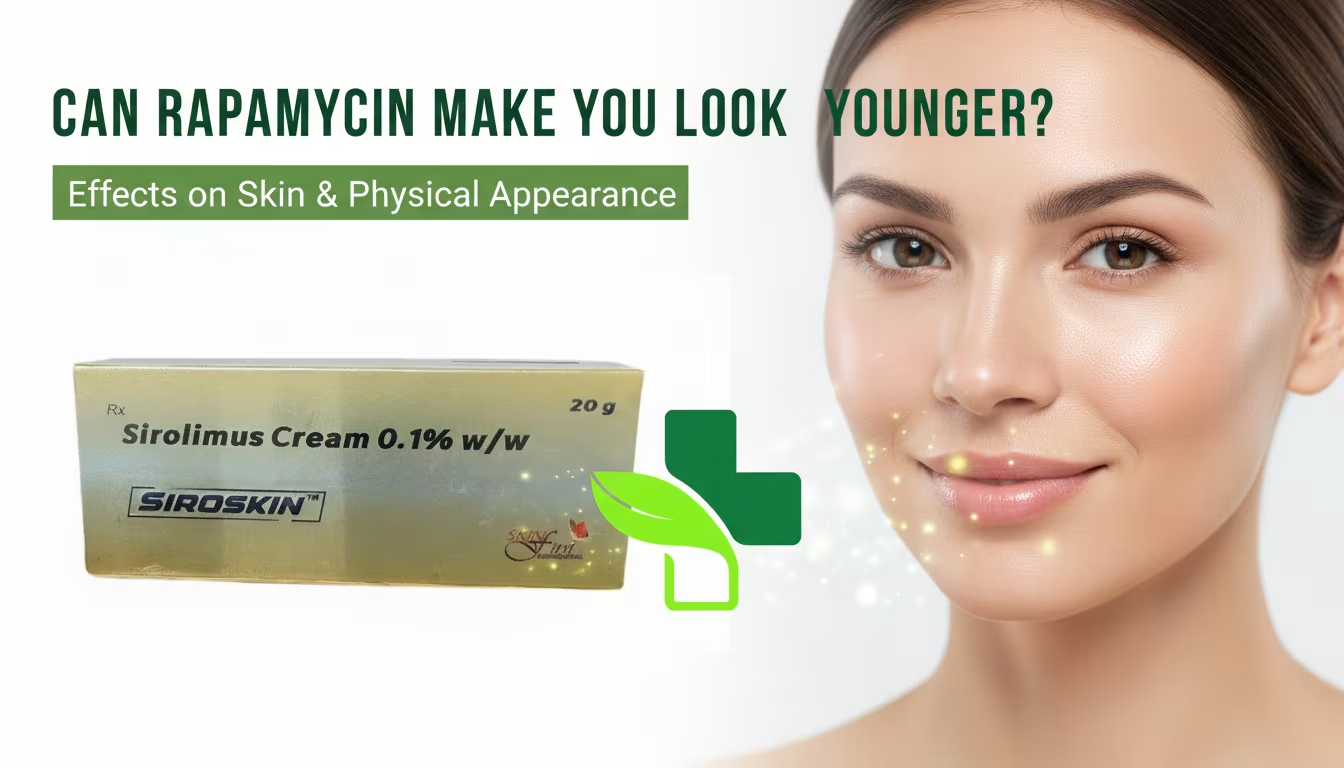
Some users aged 48–65 report that fine lines faded and skin felt more elastic after 3–6 months on 6mg weekly. Lisa, a 52-year-old user, reported her hair became thicker and some grey hairs were darkening after six months on 5mg weekly. However, clinical review of high-dose mouse studies cautions that excessive mTOR inhibition can actually damage lens epithelial cells.
Rapashop offers an expedited 10-day delivery, free with every order.
Resource links
What is the clinical evidence to support off-label rapamycin therapy in healthy adults?
Biohacking Longevity: Personal Stories of Rapamycin’s Anti-Aging Benefits
Six months of Rapamycin at 10mg/week: update with lab work
Experiences starting Rapamycin for first time
Lab results after 4 months of use
Rapamycin for longevity: opinion article
What is the Rapamycin Dose / Dosage for Anti-Aging or Longevity?
Targeting ageing with rapamycin and its derivatives in humans: a systematic review
An update on my experience with rapamycin after 6 months and my plans going forward.
What is the Rapamycin Dose / Dosage for Anti-Aging or Longevity?