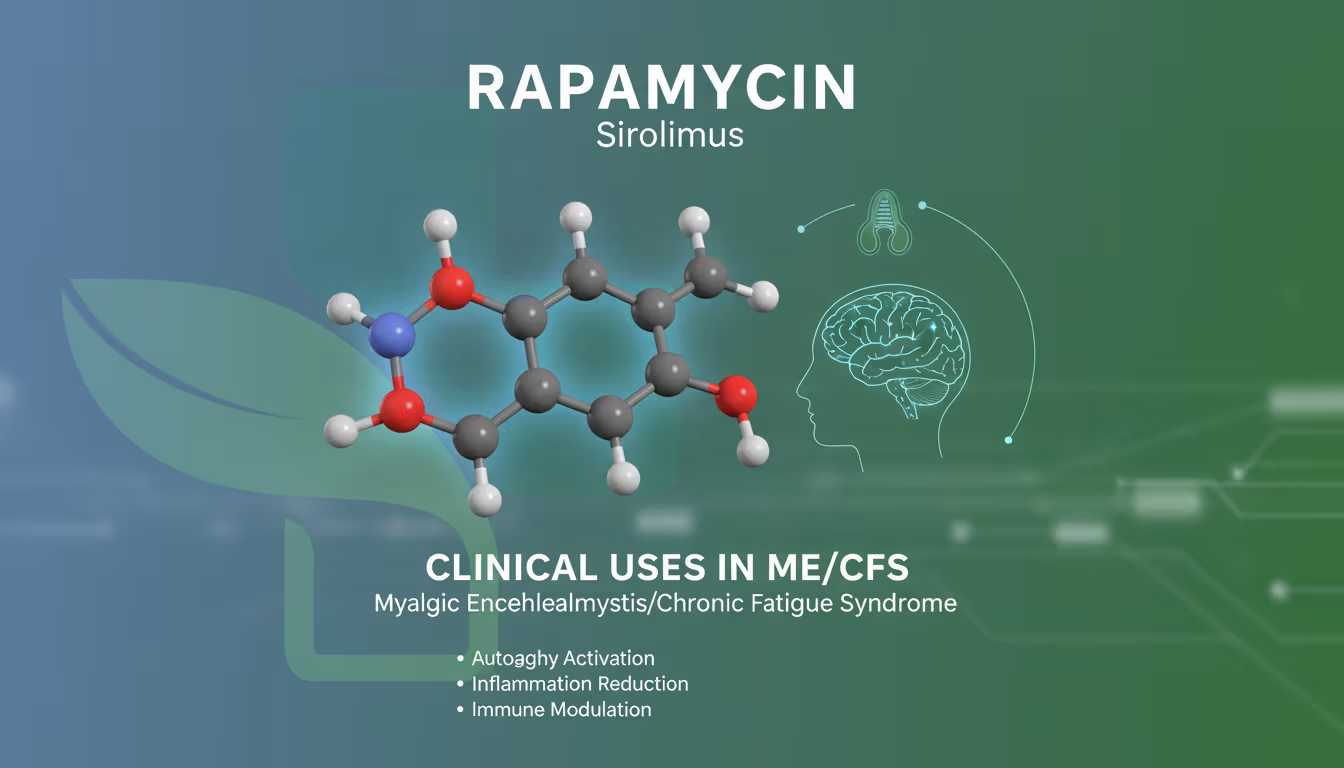

Weekly Rapamycin Shows Promise in Improving Symptoms of ME/CFS in Early Clinical Trial
Early results from a phase 1 clinical trial suggest that weekly administration of rapamycin may significantly improve patient-reported outcome measures (PROMs) in individuals living with Myalgic Encephalomyelitis/Chronic Fatigue Syndrome (ME/CFS). This emerging rapamycin ME/CFS trial adds to growing evidence around low-dose rapamycin for ME/CFS patients and highlights increasing interest in rapamycin as a potential option for chronic fatigue symptoms improvement. The findings were presented by Stephanie L. Grach, MD, MS, assistant professor of medicine at Mayo Clinic, during the 2025 American College of Physicians (ACP) Internal Medicine Meeting, held April 3–5 in New Orleans, Louisiana.
ME/CFS is a complex, debilitating condition characterized by profound fatigue, post-exertional malaise (PEM), sleep disturbances, autonomic dysfunction, and a constellation of other symptoms. Current treatment options remain limited, prompting increased interest in novel approaches such as rapamycin for chronic fatigue that target underlying biological mechanisms rather than symptomatic relief alone.
“ME/CFS is a devastating infection-associated multisystem illness,” Grach and colleagues stated in their presentation. “Rapamycin has emerged as a candidate therapy due to its potential to modulate systemic inflammation and promote autophagy via mTOR inhibition,” aligning with broader research into rapamycin and mTOR as a hidden switch controlling aging and chronic disease processes.
Study Overview
The data presented were drawn from the first 40 participants in the rapamycin ME/CFS trial who had completed three months of follow-up. Participants received a starting dose of 0.5 or 1 mg of rapamycin weekly, which was gradually increased to a maximum of 6 mg per week or as tolerated—consistent with dosing strategies explored in off-label use of rapamycin from longevity to weight loss.
Throughout the study, participants completed several validated PROMs at baseline and monthly intervals:
- Bell Activity Scale (BAS)
- Multidimensional Fatigue Inventory (MFI)
- RAND SF-36 Health Survey
- Symptom Severity Scale version 2.2 (SSS), assessing fatigue, sleep, PEM, and orthostatic intolerance
Routine safety labs were also conducted at each visit to monitor for adverse effects, reflecting the growing emphasis on safety seen across rapamycin longevity drug research.
Key Findings
By the three-month mark, participants showed statistically significant improvements across multiple PROMs, supporting measurable chronic fatigue symptoms improvement:
- Bell Activity Scale (BAS): Improved from 34.84 (SD 3.13) to 42.26 (SD 3.87); P < .001
- SSS Sleep Scores: Improved from 7.35 (SD 0.38) to 5.03 (SD 0.58); P < .001
- SSS PEM Scores: Improved from 7.05 (SD 0.39) to 3.77 (SD 0.56); P < .001
- SSS Orthostatic Intolerance (OI): Improved from 5.33 (SD 0.46) to 3.50 (SD 0.50); P < .001
- MFI Aggregate Scores: Decreased from 79.63 (SD 1.43) to 72.26 (SD 2.28); P < .001
These findings suggest a potential therapeutic benefit of rapamycin ME/CFS treatment in addressing core symptoms of the condition and complement earlier reports where weekly rapamycin showed promise in improving ME/CFS symptoms. Subgroup analyses and more detailed data are expected to be released in future publications.
Participant Profile
The cohort had a mean age of 47.43 years (range: 24.80–76.38), with 32% male and 68% female participants. The average disease duration was 16.45 years, and the majority (92%) identified as non-Hispanic White. The mean BMI was 26.64.
Scientific Rationale
Rapamycin, a well-known mTOR inhibitor, has gained attention in aging and chronic disease research for its anti-inflammatory and autophagy-promoting properties. Its role in cellular stress response is central to mTOR’s role in aging and immune regulation.
Preclinical studies conducted by members of this research team have indicated that impaired autophagy—specifically involving the release of ATG13 into serum—could represent a pathological mechanism in ME/CFS. These mechanistic insights parallel broader investigations into rapamycin and longevity science and emerging therapeutic applications beyond aging alone.
“In line with suspected abnormalities of mTOR inhibition, the results of our study support the potential use of rapamycin in ME/CFS,” Grach and colleagues concluded—adding to a rapidly expanding body of evidence shaping the future of healthy aging and disease intervention