
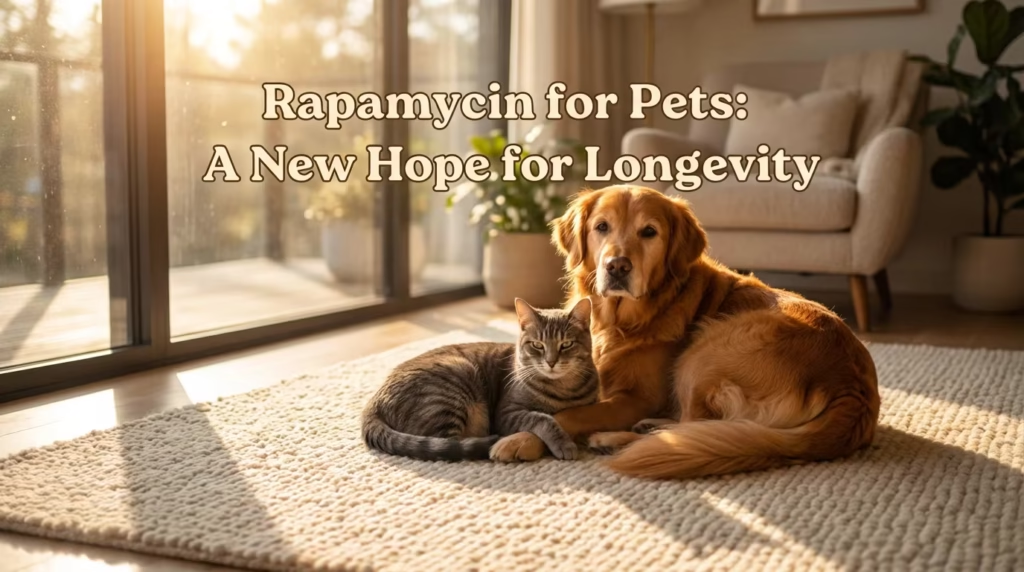
Rapamycin for Pets: A New Hope for Longevity in Cats and Dogs
Introduction
How rapamycin could help dogs and cats live longer, healthier lives? The science of pet longevity is entering a new era.
For an overview of rapamycin’s broader impact on aging, you can also explore Rapamycin and Longevity Science.
Originally discovered on Easter Island in the 1970s, this compound was first developed as an immunosuppressant for transplant patients. But soon after, researchers began to notice something remarkable — in animal studies, rapamycin not only extended lifespan but also improved the quality of life during aging. This foundation helped inspire today’s interest in pet applications, discussed further in Rapamycin for Pets Longevity.
Now, this same question is being asked for our four-legged family members: Could rapamycin help dogs and cats live longer, healthier lives?
From Lab Mice to Loyal Companions
In the last decade, dozens of studies have shown that rapamycin can extend lifespan and delay age-related diseases in species ranging from yeast to mice. Scientists exploring mechanisms behind these effects often refer to mTOR biology — covered in mTOR’s role in aging and Rapamycin & mTOR: The Hidden Switch.
This success naturally led researchers to wonder whether the same could be true for pets, especially since dogs share not only our homes but also many of our age-related diseases, such as arthritis, heart disease, and cognitive decline.
At the Dog Aging Project (DAP) and several veterinary universities, researchers have been exploring low-dose rapamycin treatments in aging dogs. Early results are promising: dogs receiving carefully monitored doses of rapamycin have shown improved heart function, better mobility, and even sharper cognitive performance. These findings align closely with results from Dog Aging Project research updates.
In one pilot study, older dogs on rapamycin were able to run longer, stay more active, and displayed increased social engagement — tail wags included! More detailed insights can be found in Rapamycin Heart Health Study and Weekly Rapamycin Improves Symptoms (showing parallels in other species).
Healthy Aging, Not Just Longer Living
The goal of rapamycin research in pets isn’t merely to make them live longer — it’s to help them age gracefully, maintaining vitality, playfulness, and affection for as long as possible. This approach mirrors trends in human research, explored in Rapamycin and the Future of Healthy Aging and Rapamycin as a Longevity Drug.
Imagine an elderly cat that still climbs its favorite windowsill, or a senior dog that still joins you for evening walks — that’s the vision driving this field. You can also read about ongoing discoveries in The Secret of Longevity.
A Shared Journey of Longevity
Our bond with animals is one of the purest forms of love — unconditional, joyful, and full of meaning. As science continues to uncover the mysteries of aging, rapamycin represents a new symbol of hope: that one day, our beloved companions might share not only our lives but also our journey toward healthy longevity.
For pet-specific breakthroughs, you can explore:
- Is Rapamycin a Key to Life Extension for Pets?
- Rapamycin Shows Promise in Preventing Feline Heart Disease
Because in the end, longevity isn’t just about living longer — it’s about living better, together.
Resource links
Dog Aging Project – Rapamycin Clinical Trials
Kaeberlein et al., 2016 – “Rapamycin reverses age-related heart dysfunction in dogs”
Dog Aging Project TRIAD Trial Description (Ongoing Clinical Trial)
Veterinary Case Reports on Low-Dose Rapamycin in Cats
Kaeberlein, M. (2021). Rapamycin and Longevity – Review Article