
Mikhail Blagosklonny’s Pioneering Work on Rapamycin and Anti-Aging: Explore mTOR Inhibition for Longevity
Dr. Mikhail Blagosklonny is best known for his pioneering research on aging, cancer, and the Rapamycin mTOR pathway, which is central to his work on rapamycin and its potential as an anti-aging and cancer therapeutic. He has written extensively about the potential of rapamycin for anti aging. His research largely focuses on the mTOR pathway, which rapamycin targets. Below you can find summaries of the doctor’s works:
Rapamycin mTOR and the Mechanistic Target of Aging
Dr. Blagosklonny’s work on Rapamycin mTOR is arguably his most significant contribution. He proposed that the mTOR pathway plays a crucial role in aging and age-related diseases. mTOR regulates cell growth, metabolism, and longevity, and his research suggests that inhibiting mTOR with rapamycin can slow aging and extend lifespan by mimicking the effects of caloric restriction, as highlighted in studies like rapamycin mimics the effects of caloric restriction. These findings are central to understanding rapamycin for longevity and its therapeutic potential.
The Hyperfunction Theory of Aging
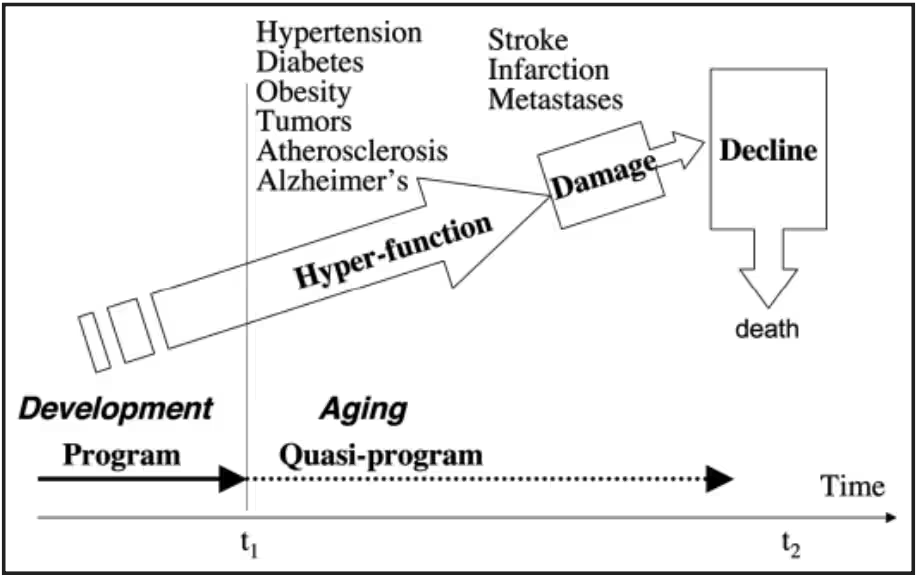
One of Dr. Blagosklonny’s most influential theoretical contributions is the hyperfunction theory of aging. In this theory, he proposes that aging is not just a result of accumulated damage, as traditionally thought, but rather a pathological continuation of the processes that occur in early life. He argues that the aging process results from the continuous activation of cellular growth and survival pathways, including Rapamycin mTOR, which should normally be switched off after development. When these pathways remain hyperactive in adulthood, it accelerates aging and increases the risk of age-related diseases, emphasizing the rationale for rapamycin for life extension.
Rapamycin for Anti-Aging and Longevity
Blagosklonny’s work in longevity science has positioned rapamycin for anti aging as a promising therapeutic tool for extending lifespan and improving healthspan. He has shown that Rapamycin mTOR inhibition can extend the lifespan of animals and may offer significant benefits in delaying aging-related diseases, including cancer, neurodegeneration, and heart disease. His research supports the potential of rapamycin for longevity interventions in humans, as discussed in broader analyses like can rapamycin really help you live longer.
Cancer and Aging: Shared Molecular Pathways
In addition to his work on aging, Blagosklonny has made significant contributions to cancer research. He proposed that the same pathways that control cell growth, such as Rapamycin mTOR, can also play a role in the development and progression of cancer. His research suggests that mTOR inhibitors like rapamycin may be useful in treating cancer, not just by slowing cell proliferation but also by improving the immune system’s ability to fight the disease. These insights link rapamycin and aging research directly to cancer biology and longevity science.
Theory of “Aging as a Cancer-like Disease”
Blagosklonny has also proposed that aging and cancer share common molecular pathways, and that cancer and aging may be two sides of the same coin. The same mechanisms that drive cellular growth and proliferation in cancer can contribute to aging, leading to the breakdown of tissue homeostasis and the onset of age-related diseases. This reinforces the concept of using rapamycin for life extension as a preventative strategy.
Blagosklonny’s Publications and Impact
Dr. Blagosklonny has published hundreds of research papers and is considered a leading voice in the fields of aging and cancer biology. He has written extensively about the mechanisms behind aging, the therapeutic potential of rapamycin, and the biology of cancer. His articles in journals like Cell Cycle and Oncotarget have had a profound impact on both fields, shaping ongoing studies in rapamycin and aging research and advancing understanding of Rapamycin mTOR for healthspan and lifespan interventions.