
Is Rapamycin More Effective Than Intermittent Fasting for Lifespan?
Recent studies show rapamycin extends lifespan in animals comparably to dietary restriction like intermittent fasting, but human data remains limited with both offering mTOR inhibition benefits. No clear winner emerges yet—rapamycin may edge out in late-life starts, while fasting proves more accessible. This post dives into mechanisms, trials, and real-world insights to help you weigh options for longevity.
Does Recent Research Show Rapamycin Equals or Beats Fasting?
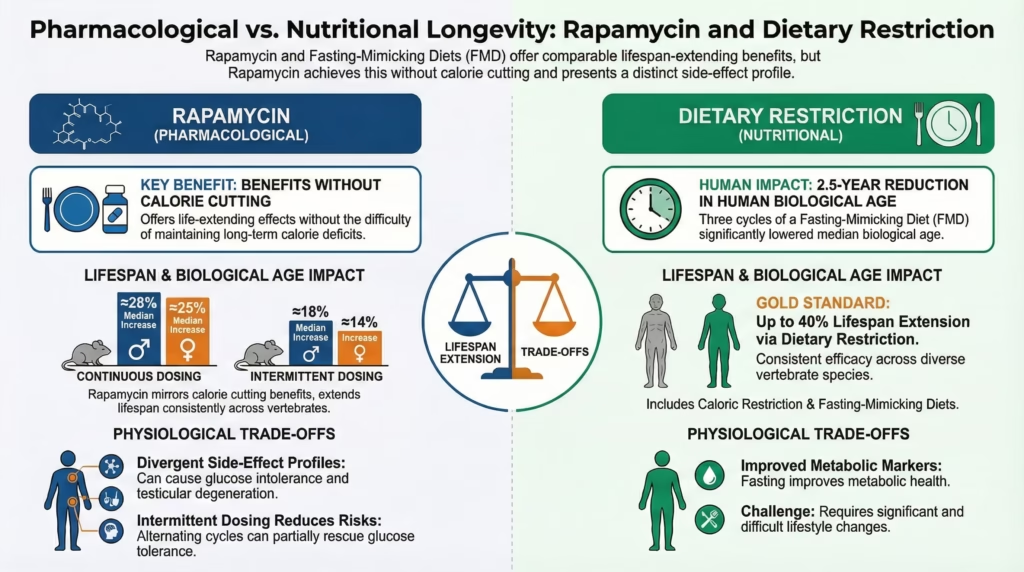
A 2025 meta-analysis of 167 studies across vertebrates found rapamycin extends lifespan to the same degree as intermittent fasting or calorie restriction, with consistent effects across sexes and species. Intermittent fasting also boosts healthspan markers, but rapamycin works independently of dietary changes.
Animal models reveal rapamycin mimics fasting’s mTOR suppression without calorie cuts. In mice, intermittent rapamycin dosing increased female lifespan by 14%, continuous by 25%, avoiding glucose issues from daily use. Fasting-mimicking diets in humans raised predicted life expectancy by 0.8 years after three cycles via reduced biological age. Experts like Peter Attia note both interventions suppress mTOR to drive autophagy, the key longevity pathway.
Conflicting data exists: some mouse strains show fasting shortens lifespan if started mid-life. Rapamycin, however, succeeds even in old age, unlike fasting which loses punch later.
How Do Rapamycin and Intermittent Fasting Target Aging Pathways?
Both inhibit mTORC1 to boost autophagy, but rapamycin provides precise, potent suppression while fasting activates broader stress responses like ketogenesis and circadian reset. Rapamycin uniquely works at any age; fasting’s effects fade in older models.
Rapamycin directly blocks mTORC1, reducing protein synthesis and enhancing cellular cleanup—effects fasting achieves indirectly via nutrient deprivation. A 2025 study combined rapamycin with trametinib for 30%+ mouse lifespan gains, surpassing either alone by hitting multiple growth pathways. Intermittent fasting cuts oxidative stress and ROS, improving insulin sensitivity and heart resilience in rodents.
Mechanistic edge: Rapamycin sustains mTOR inhibition without adaptation; fasting’s signal weakens over time or in fed states. Matt Kaeberlein highlights fasting outperformed calorie restriction in worms, but rapamycin scales better across species.
What Do Animal Studies Reveal on Lifespan Extension?
Rapamycin matches dietary restriction’s lifespan boosts in eight vertebrate classes, including primates, while intermittent fasting varies by timing and strain. Intermittent rapamycin extended late-life mouse survival without metabolic harm.
In female mice starting at 20 months, intermittent rapamycin boosted lifespan despite reduced activity. Fasting extended worm adulthood more than constant restriction, but rodent results mix—some strains lose lifespan mid-onset. 2025 vertebrate review confirms rapamycin’s reliability vs. fasting’s context-dependence.
| Intervention | Mouse Lifespan Gain | Side Notes |
|---|---|---|
| Rapamycin (intermittent) (2024 Study) | 14-25% | No glucose issues |
| Intermittent Fasting (2024 Study) | Variable (0-20%) | Strain/timing dependent |
| Fasting-Mimicking (2024 Study) | ~5-10% equiv. | Human bio age proxy |
What Human Evidence Exists for Longevity?
Human trials lag—no direct lifespan data—but rapamycin shows immune and metabolic gains at 3-10mg weekly; fasting improves risk factors with minor sides. PEARL trial tests rapamycin; FMD (Fasting-mimicking Diet) cycles predict +0.8 years expectancy.
2025 ovarian study confirmed low-dose rapamycin engages aging pathways safely. Peter Attia experiments with 5mg rapamycin weekly alongside fasting for mTOR hits. Fasting trials reduce biological age via hepatic markers.
No head-to-head human trials yet—experts urge caution, prioritizing lifestyle first.
Risks: Rapamycin may cause mouth sores or fatigue; fasting risks muscle loss if prolonged.
How Do Users Report Experiences on Forums?
Reddit users praise rapamycin’s energy and clarity at low doses but note fatigue or sores; intermittent fasters report easier adherence yet hunger crashes or weight regain. Many combine both for synergy.
Anonymized insights: One user quit daily rapamycin due to tiredness, switched to weekly for longevity without issues. Fasters lament long-term adherence, with one regaining weight post-crash. Low-dose rapamycin (3-10mg/week) shows few sides in self-reports. Forums buzz on rapamycin mimicking fasting minus effort.
Can You Combine Them for Better Results?
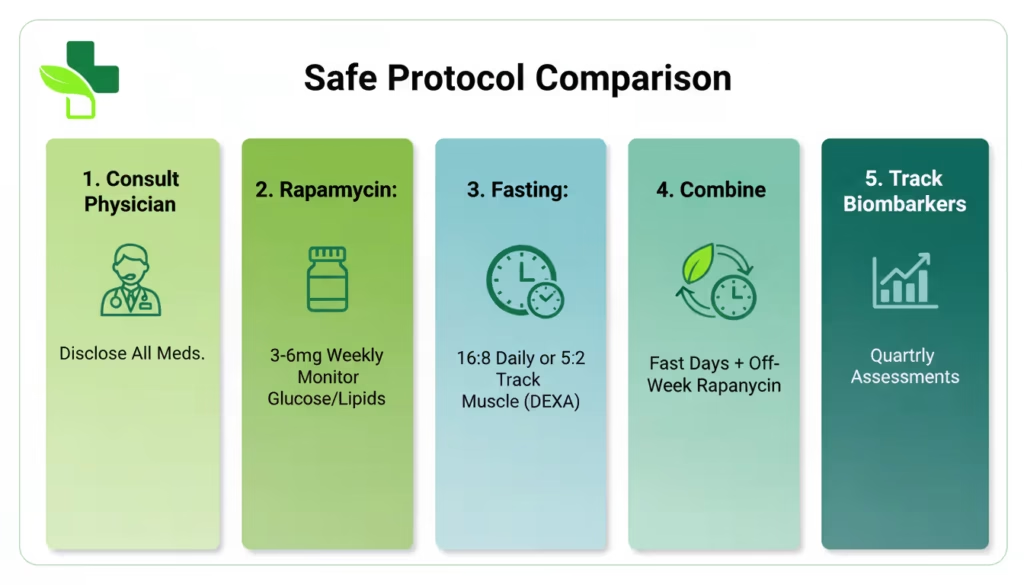
Yes—intermittent rapamycin recapitulates fasting benefits with fewer downsides, and combos may amplify via sustained mTOR inhibition. Experts like Attia layer both.
Fasting inhibits mTOR transiently; rapamycin extends it. Mouse data supports intermittent dosing to dodge continuous risks. User protocols: Weekly rapa + 3-day fasts monthly.
What Risks and Side Effects Compare?
Rapamycin risks: Mouth sores, infections, glucose intolerance (less with intermittent); fasting: Hunger, muscle loss, adherence failure. Both safer intermittently; monitor closely.
Intermittent regimens minimize harms—rapamycin preserves glucose tolerance, fasting avoids chronic stress. Peter Attia notes rapamycin’s potency but unproven dosing. Balanced view: Benefits promising, but not FDA-approved for longevity.
Conclusion
Rapamycin rivals intermittent fasting in animal lifespan extension via reliable mTOR targeting, potentially superior for late starts, but human evidence favors fasting’s accessibility. Weigh personal tolerance, consult experts, and track biomarkers.
Explore pharmaceutical-grade options at Rapashop.net for research—prioritize safety with professional guidance.
No, it’s approved for transplants/immunosuppression; off-label longevity use lacks approval. The biohacker community is using off-label Rapamycin following the community feedback and the results in animal studies
Animal yes, humans show healthspan gains but lifespan data pending; varies by protocol.
Intermittent fasting—drug-free, but rapamycin intermittent low-dose shows promise with monitoring, Side effects of Rapamycin are mild on low doses and reversible on intermittent dosing.
Partially mimics, but fasting adds ketosis benefits; combo optimal.
Yes—intermittent rapamycin recapitulates fasting benefits with fewer downsides, and combos may amplify via sustained mTOR inhibition.
Rapashop is a customer-focused, Rapamycin supply service for your longevity journey.
Resource links
Rapamycin offers life-extending benefits comparable to eating less
Intermittent fasting and longevity: From animal models to implication for humans
Rapamycin seems to boost longevity as effectively as eating less
Dr. Peter Attia: Fasting, Autophagy, and mTOR Inhibition – High Intensity Health
Intermittent and periodic fasting, longevity and disease
Rapamycin for longevity: opinion article
Intermittent fasting and longevity: From animal models to implication for humans
Matt Kaeberlein discusses healthspan, longevity, and rapamycin
Intermittent Administration of Rapamycin Extends the Life Span of Female C57BL/6J Mice
Rapamycin offers life-extending benefits comparable to eating less