
Drug combination found to extend lifespan by 30 % “INDEPENDENT REVIEW”
Breakthrough Drug Duo Prolongs Mouse Lifespan by 30%
A pioneering study from Germany’s Max Planck Institute for Biology of Aging has unveiled that a combination of two existing cancer medications—rapamycin and trametinib—can rapamycin extend lifespan in mice by approximately 30%. This discovery aligns with earlier findings on rapamycin’s longevity potential, such as those discussed in Is Rapamycin an Effective Longevity Drug? and Can Rapamycin Really Help You Live Longer?. It offers promising insights into potential anti-aging therapies for humans and strengthens the scientific evidence surrounding lifespan increase through targeted drug interventions.
The Study’s Findings
In the research, mice treated with rapamycin alone experienced a lifespan increase of 15–20%, while those administered trametinib saw a 5–10% extension. However, the most significant results were observed when both drugs were used together, leading to a 30% increase in lifespan. Beyond longevity, the treated mice exhibited improved health markers, including rapamycin reduce inflammation—a benefit also highlighted in studies such as Rapamycin and mTOR: Could This Be the Hidden Switch Controlling Aging?—and slower tumor development. This demonstrates how the rapamycin and trametinib combination enhances overall metabolic and cellular health, similar to findings in A New Hope Against Aging: The Powerful Duo of Rapamycin and Trametinib.
Mechanisms of Action
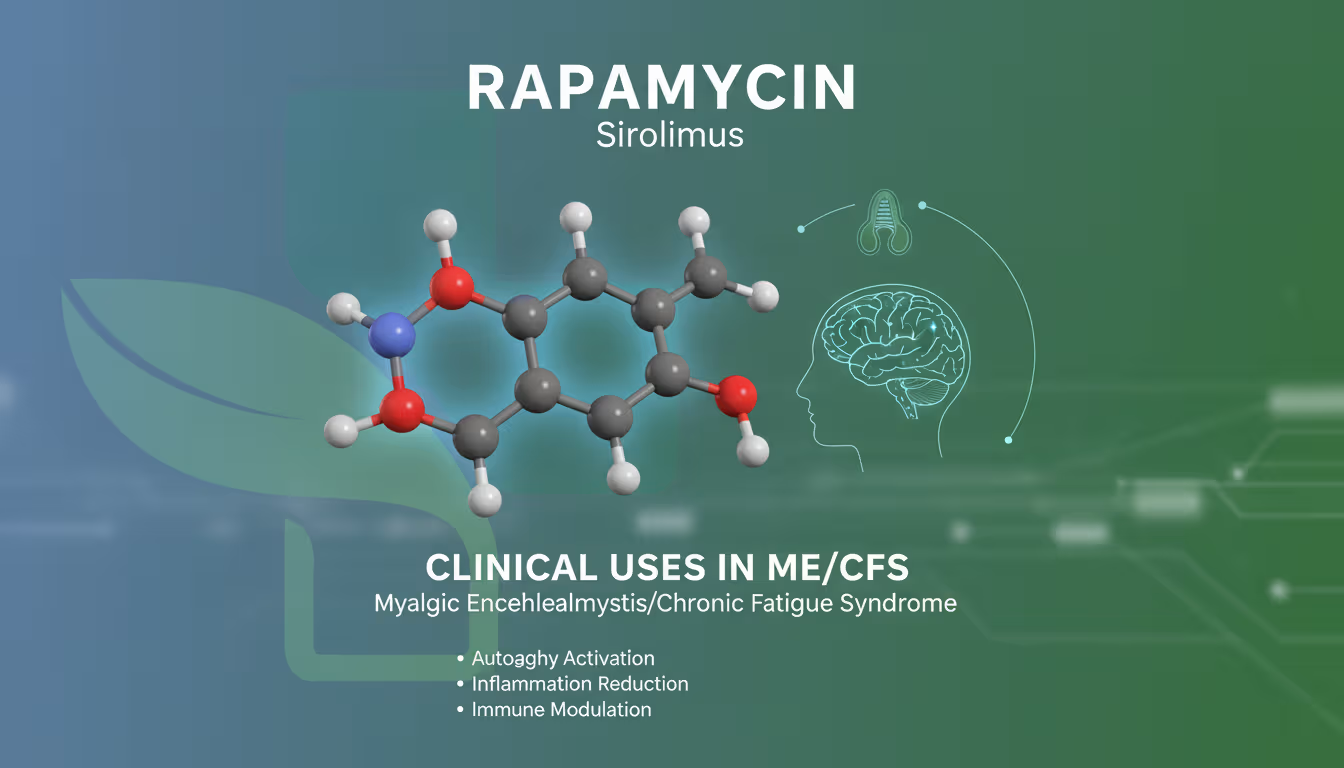
Rapamycin functions by inhibiting the mTOR pathway, which regulates cell growth and metabolism. You can learn more about mTOR’s role in aging in mTOR’s Role in Aging.
Trametinib, on the other hand, targets the MEK1/2 enzymes involved in cell division and survival. Together, these drugs appear to complement each other, enhancing their individual effects and mitigating potential side effects.
This mechanism overlaps with other rapamycin research, such as Rapamycin Mimics the Effects of Caloric Restriction and Rapamycin and the Future of Healthy Aging.
This study marks a significant step forward in aging research, highlighting the potential of existing medications to promote healthier aging. As research progresses, there is hope that similar approaches could be developed for human use, offering new avenues for enhancing quality of life in later years. Related findings can be explored in Rapamycin Future of Longevity and What’s Next for Rapamycin? Inside the New Age of Longevity Research