

Topics
News
Does Rapamycin Affect mTORC2 and Why Is That Dangerous?
Rapamycin inhibits mTORC1 rapidly but can disrupt mTORC2 with prolonged or high exposure, potentially leading to insulin resistance, immune suppression, and endothelial damage—serious risks for longevity seekers. Intermittent low dosing minimizes mTORC2 impact while preserving benefits like autophagy induction. Experts like Peter Attia and Matt Kaeberlein advocate pulsed protocols to balance these effects. How Does…
Can Sirolimus Cause Headaches? Understanding Neurological Side Effects
Rapamycin (Sirolimus / Rapamune), increasingly explored in longevity circles for its mTOR inhibition, can indeed trigger headaches in a subset of users, often linked to blood pressure fluctuations or direct neurovascular effects. Clinical data and user reports confirm this as a common but typically transient issue, while rarer neurological risks like tremors or PRES demand…

What are the best longevity supplements available for purchase? A Data-Driven Review (2026)
The quest to slow biological time is no longer fringe science; it's a multi-billion dollar industry. Walking into a pharmacy or scrolling online presents a dizzying array of pills and powders claiming to extend healthspan. But when you strip away the marketing, the question remains: What are the best longevity supplements actually supported by clinical data? While…
Where to Find Rapamycin Capsules for Longevity: A 2026 Buyer‘s Guide to Quality and Safety
The search for Rapamycin capsules formulated for longevity has moved from fringe biohacking forums to mainstream medical consultations. Following the release of the PEARL trial results in 2025 and new data on DNA damage protection in early 2026, demand has surged. However, sourcing remains complex. Unlike over-the-counter supplements, rapamycin (sirolimus) is a prescription drug, and the formulation…
Best Rapamycin Brands, Generics & Compounds
Choosing between rapamycin best brands is no longer just a matter of fulfilling a prescription; it is a critical decision for longevity enthusiasts who must balance bioavailability, manufacturing transparency, and clinical reliability. While Pfizer’s brand-name Rapamune remains the industry benchmark, the market is now flooded with Indian generics like Biocon (Rapacan), Zydus (Siromus) and Kachhela…
Molecular Gatekeeping: How Rapamycin Inhibits mTORC1
The study of the Mechanistic Target Of Rapamycin (mTOR) has evolved from a curious discovery in Easter Island soil to the cornerstone of modern longevity science. While early research focused on its immunosuppressive properties, current clinical interest centers on its role as the "master regulator" of cellular growth and aging. Understanding the precise structural mechanism…
Rapamycin vs. Metformin: The 2026 Guide to the “Synergy Stack”
In 2026, the discussion around longevity has moved from "What is the best pill?" to "How do we balance the pathways?" The debate over Rapamycin vs. Metformin for longevity has reached a turning point in 2026. While both molecules dominated early geroscience discussions, recent meta-analyses and clinical data now distinguish between "fringe benefits" and "fundamental…

Real People Taking Rapamycin: 6-Month Experience Reports
For many in the longevity community, the six-month mark is the "Gold Standard" milestone. It is the point where the initial placebo effects fade, and the real biological data—from lipid panels to biological age clocks—begins to tell a definitive story. While clinical trials like the ERAP trial for Alzheimer’s and the Kraig et al. study…
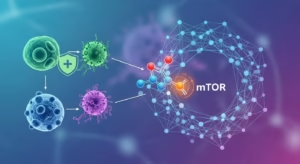
Rapamycin and Cancer Prevention: The mTOR Connection
For many people interested in living longer, the goal is simple: avoid the "Big Four" diseases of aging. At the top of that list is cancer. Modern science is moving away from just treating cancer after it appears and toward Rapamycin and cancer prevention as a way to stop the disease before it even starts.…
Rapamycin and Metabolic Effects: Blood Sugar, Cholesterol, and What to Monitor
Rapamycin and Metabolic Effects: Blood Sugar, Cholesterol, and What to Monitor The pursuit of human longevity has transitioned from speculative "elixirs" to the rigorous science of geroprotection, with the mechanistic target of rapamycin (mTOR) pathway serving as a central hub. While Rapamycin is the most robust pharmacological intervention for extending lifespan in model organisms, its…