
A New Hope Against Aging: The Powerful Duo of Rapamycin and Trametinib
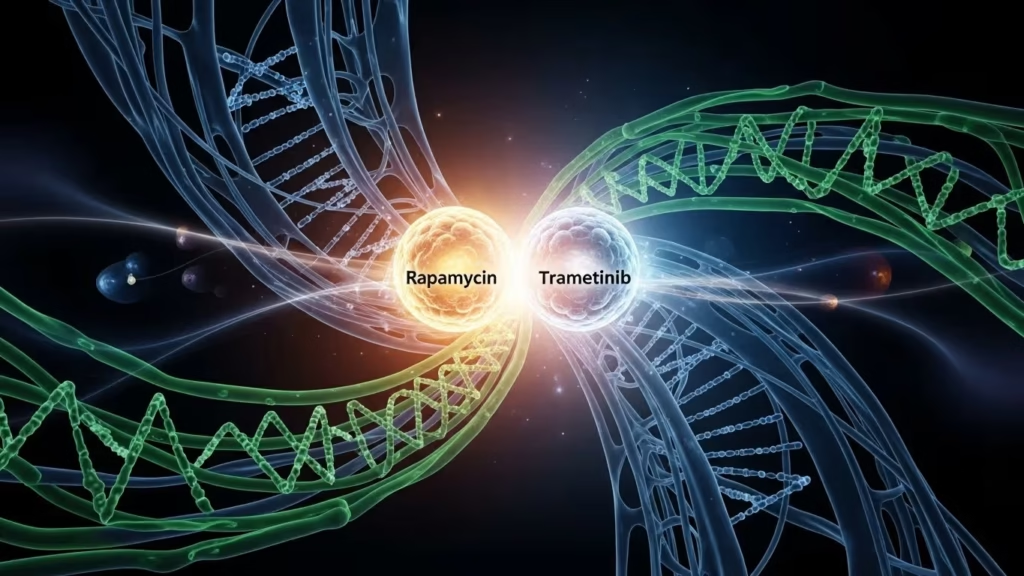
Slowing aging is no longer just science fiction. A newly published scientific study shows that a combination of two FDA-approved drugs—rapamycin and trametinib—can significantly slow down aging and extend lifespan in mice. This aligns with growing interest in FDA approved anti aging drugs and how they contribute to longevity science, as highlighted in articles like Is Rapamycin an Effective Longevity Drug?. But here’s the most exciting part: it’s not just about living longer, it’s about living healthier—especially when exploring Rapamycin for lifespan increase, a topic covered in Can Rapamycin Really Help You Live Longer? as a promising pathway.
Two Different Pathways, One Shared Goal: A Longer, Healthier Life
Rapamycin targets the mTOR pathway, which controls cell growth and protein synthesis, making it one of the most well-studied mTOR inhibitor anti aging therapies today—a concept explored further in Rapamycin and mTOR: Could This Be the Hidden Switch Controlling Aging?.
Trametinib, on the other hand, inhibits the MEK/ERK signaling pathway, associated with cell proliferation and cancer development.
Scientists hypothesized that targeting both aging-related pathways at once might produce stronger results—and they were right. This breakthrough is reshaping how anti aging drugs research is conducted globally, similar to findings shared in Rapamycin’s New Frontier in Longevity Research.
Stunning Results from the Study
In mouse trials, both drugs extended lifespan when used individually, but their combination led to dramatically greater effects:
- Trametinib alone: ~7–10% increase in median lifespan
- Rapamycin alone: ~16–17% increase
- Combined: up to 27–35% increase in lifespan!
These results further highlight the potential of Rapamycin for lifespan increase, also supported by findings in The Youth Pill—Shocking Scientific Discoveries About Rapamycin, and why scientists continue evaluating Rapamycin dosage for anti aging protocols in controlled research environments. Additional related research includes the 30% lifespan extension reported in Drug Combination Found to Extend Lifespan by 30%.
And it’s not just about longevity. Mice receiving the combo treatment also experienced:
✅ Fewer tumors in the liver and spleen
✅ Reduced neuroinflammation in the brain
✅ Lower systemic inflammation across key organs
✅ Healthier brain glucose metabolism
✅ Downregulation of aging- and cancer-related genes
⚠️ What About Side Effects?
Good news: the combination didn’t introduce additional side effects.
While rapamycin can sometimes cause blood sugar issues (hyperglycemia), trametinib did not, and using both together did not worsen the problem. In fact, the side-effect profile remained manageable and predictable, which is an important consideration in anti aging drugs research and future human protocols involving mTOR inhibitor anti aging compounds.
These metabolic insights connect closely with Rapamycin Mimics the Effects of Caloric Restriction and Rapamycin and the Future of Healthy Aging.
Why This Matters
Because both drugs are already FDA-approved, meaning they’re ready for clinical trials in humans. This places them in the spotlight among FDA approved anti aging drugs currently being evaluated, as discussed in Rapamycin Longevity Drug Insights.
So far, the research shows clear benefits in mice. The next big question is: Can these effects be replicated in humans?
If yes, this could be the first real anti-aging drug protocol in history, especially as researchers refine Rapamycin dosage for anti aging for safe human application—an area supported by ongoing findings in Rapamycin in 2025: New Discoveries.
In Summary:
Rapamycin + Trametinib = Longer, healthier life
Suppresses aging at the cellular level
Reduces inflammation and tumor risk
Shows strong effects with manageable side effects
Ready for human research
Science is telling us—louder than ever—that aging may not be a fixed destiny.
And perhaps, these two drugs are paving the way for one of the greatest breakthroughs in human health—much like the broader trends noted in The Revolution That Extends Life and Rapamycin and Longevity Science.
Could slowing aging become a reality?
This research strongly suggests the answer may be “yes,” especially as interest in Rapamycin for lifespan increase continues to grow, supported by evolving studies such as Rapamycin: The Future of Longevity