
Rapamycin and Longevity: Does mTOR Inhibition Hold the Key to Extending Human Healthspan?
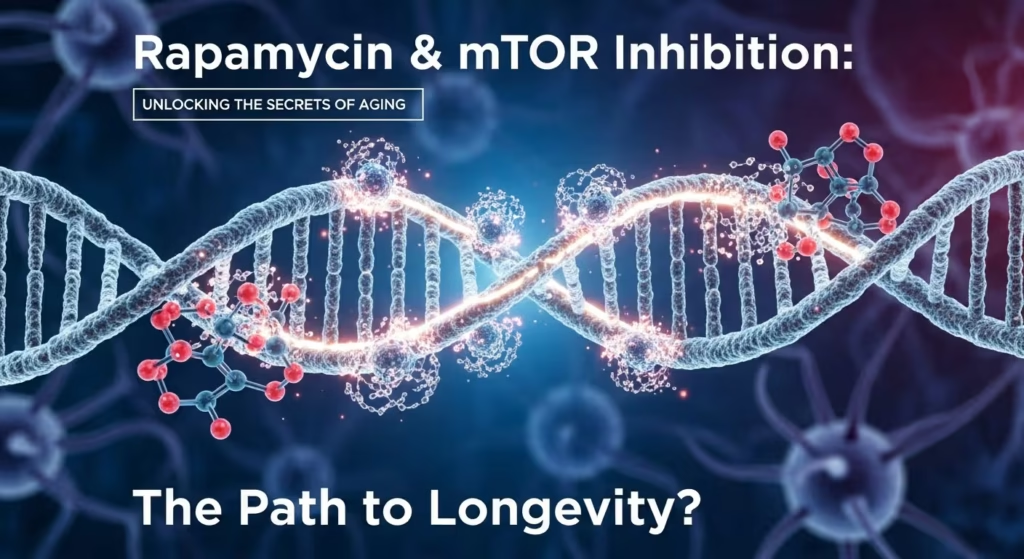
Emerging evidence suggests that Rapamycin — an mTOR inhibitor long used in clinical settings — may suppress core aging mechanisms by moderating cellular hyperfunction, delaying age-related diseases, and extending lifespan across species. This positions Rapamycin and its analogs as serious candidates for “anti-aging” interventions in humans.
Background: Why mTOR and Cellular Hyperfunction Matter in Aging
- Aging is increasingly understood not as a passive wear-and-tear process, but as an active biological program driven by persistent cellular growth and metabolic signals. Among these signals, the regulatory protein complex mTOR (mechanistic Target of Rapamycin) plays a central role — by driving cell growth, metabolism, and proliferation.
- According to the “hyperfunction theory,” when growth signals such as mTOR remain active after development ends, they trigger a detrimental “geroconversion”: cells become hypertrophic, hyperfunctional, and eventually contribute to age-related pathologies rather than healthy function.
- Therefore, inhibiting mTOR could theoretically decelerate or prevent many aspects of biological aging — not just treat individual diseases, but slow the underlying aging process itself.
What Rapamycin Research Has Taught Us So Far
- In multiple model organisms — from yeast to mammals — chronic or intermittent Rapamycin treatment extended lifespan significantly, and delayed onset of age-related diseases.
- In mice, the effect was reproducible across different genetic backgrounds and was seen even when treatment started later in life.
- In addition to lifespan extension, Rapamycin demonstrated broad “geroprotective” effects: reduction in cancer incidence, improved immune regulation, and delay or mitigation of multiple age-associated diseases.
- Importantly, Rapamycin and its analogs are already clinically approved and used in humans for other indications, which significantly lowers regulatory and safety barriers for repurposing them as longevity interventions.
Why Rapamycin Is Considered a “Universal” Anti-Aging Candidate
- Because mTOR signaling underlies many different age-related diseases — from cancer to neurodegeneration — inhibiting this pathway addresses not just one disease, but the common root: aging itself.
- Rapamycin may be most effective if administered before overt age-related diseases emerge — in a preventative or early intervention paradigm — potentially extending both lifespan and “healthspan” (years lived in good health).
- This broad-spectrum potential distinguishes Rapamycin from conventional drugs, which typically target only one disease at a time.
Practical Considerations & Implementation Strategy
- The benefits and risks of Rapamycin, like many interventions, are dose-dependent. High doses may lead to metabolic or immunological side-effects, whereas lower or intermittent dosing seems to maximize net benefits.
- Because of individual variability, “optimal dosing” for anti-aging may differ between persons. Personalized dosing schedules — potentially moderated by monitoring biomarkers — might offer the safest and most effective path forward.
- Rapamycin’s side-effects (e.g. blood-cell count alterations, mild insulin resistance) are generally well-known and, according to the author of the foundational review, “reversible and avoidable” when used appropriately.
- Given that aging is a lifelong process, the use of rapalogs for healthspan extension ideally resembles a long-term, carefully monitored intervention — not a short-term fix.
Conclusion: Rapamycin — From Transplant Drug to Potential Longevity Pill
Given decades of preclinical research and a robust theoretical foundation, Rapamycin emerges as a compelling candidate for human “anti-aging therapy.” Its ability to modulate a fundamental aging pathway, combined with evidence of lifespan and healthspan benefits across species, supports serious consideration for clinical trials aimed at aging prevention. If optimized for safety and efficacy, Rapamycin (or its analogs) could redefine medicine — not just to treat diseases, but to slow aging itself, improving health through extended years.