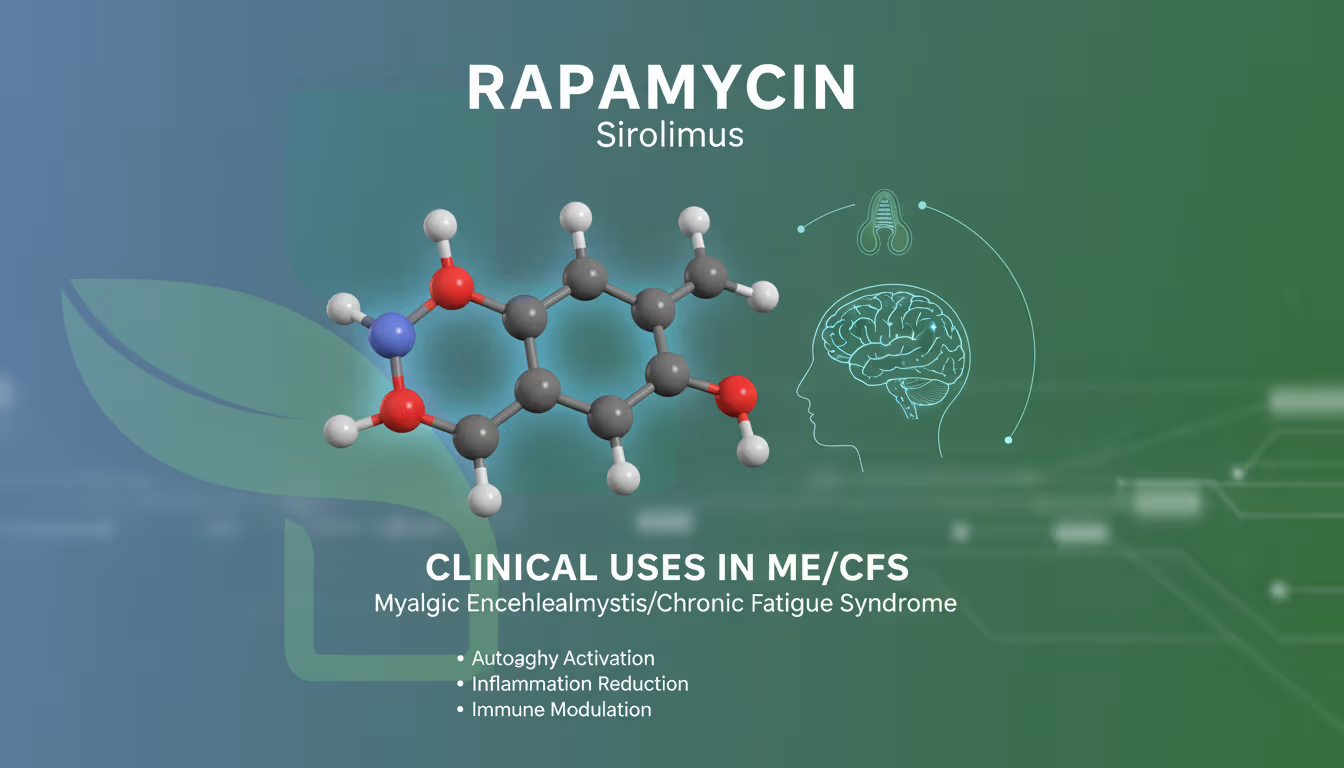

Does Rapamycin Offer New Hope for ME/CFS? Emerging Clinical Evidence From Dr. Avik Roy’s Research

For decades, people living with ME/CFS (Myalgic Encephalomyelitis / Chronic Fatigue Syndrome) have waited for treatments that address more than just symptoms. Now, new research led by Dr. Avik Roy at the Simmaron Research Institute suggests that an unexpected molecule—rapamycin—might help restore the underlying biology that drives fatigue in many patients.
Why Rapamycin? A Closer Look at “Cellular Housekeeping”
One of the biggest clues comes from a process inside our cells called autophagy—the system responsible for cleaning up damaged proteins and recycling worn-out cell structures.
In some people with ME/CFS, autophagy doesn’t work properly. When this system breaks down, it can leave cells—especially muscle cells—struggling to produce energy.
Dr. Roy’s team previously showed in mice that rapamycin, an FDA-approved drug better known for organ transplant medicine, could reboot autophagy and reduce fatigue-like symptoms. This discovery opened the door to testing rapamycin in real ME/CFS patients.
What the New Human Trial Found
The results, recently published in Journal of Translational Medicine, are turning heads in the ME/CFS community.
✔ Low-dose rapamycin was safe
No serious side effects were reported—only mild issues like temporary headaches or stomach discomfort.
✔ Most patients felt better
Across the 90-day treatment:
- Post-exertional malaise (PEM) improved
- Fatigue decreased
- Orthostatic intolerance lessened
- Sleep quality improved
- Physical function increased
- Autophagy biomarkers normalized
Nearly 75% of participants experienced measurable benefits.
Even more striking:
The people who improved the most were those whose autophagy showed the strongest recovery.
This reinforces the idea that autophagy issues may be a major driver of ME/CFS symptoms.
People With Viral-Onset ME/CFS Responded Better
Another powerful finding:
Patients whose ME/CFS began after a viral infection responded more strongly to rapamycin.
This suggests rapamycin may be especially helpful for:
- Infection-triggered ME/CFS
- ME/CFS linked to herpesvirus reactivation
A Step Toward Personalized ME/CFS Treatment
One of the biggest breakthroughs wasn’t just the treatment—it was the biomarkers the team developed.
Dr. Roy’s group created blood tests that can identify:
- Who has the most autophagy dysfunction
- Who is most likely to benefit from rapamycin
- Who might respond to other mTOR-targeted therapies
This pushes ME/CFS closer to a future where treatments can be matched to individual biology.
A Larger, More Rigorous Trial Is Already Underway
With additional funding from Solve ME, Simmaron has launched a larger follow-up trial.
This next phase will:
- Enroll more participants
- Include a placebo control
- Use wearable devices for objective data
- Provide a standardized rapamycin formulation
- Collect deeper biomarker information
As Dr. C. Gunnar Gottschalk, CEO of Simmaron, explains:
“Our goal is to develop a predictive test to identify which patients are most likely to benefit from rapamycin or other mTOR therapies.”