
Can Rapamycin Reverse Biological Age (Epigenetic Clocks)?
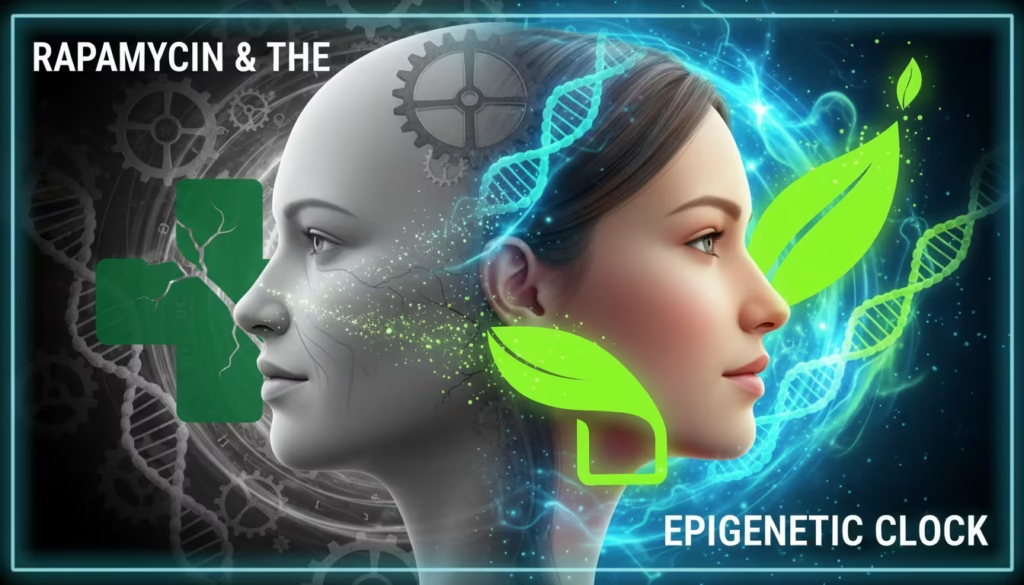
Rapamycin shows promise in slowing or partially reversing epigenetic clocks in preclinical models like human skin cells and mice, however human clinical evidence remains limited and mixed. Experts like Matt Kaeberlein highlight ongoing dog trials as key tests for translation, while users report variable biomarker shifts alongside side effects. This post dives into mechanisms, data, and real-world insights for informed exploration.
Does Rapamycin Slow Epigenetic Aging?
Rapamycin slows epigenetic aging in lab models but studies on human data is limited. Studies on human keratinocytes demonstrate it retards DNA methylation age independently of cell proliferation or senescence. Mouse brain research confirms reduced age-related methylation changes.
In a 2019 study, researchers treated cultured human skin cells with rapamycin and measured the pan-tissue epigenetic clock. The drug significantly slowed the ticking rate, aligning with human genome-wide data linking mTOR pathway variants to faster epigenetic aging.
However, experts caution translation. Matt Kaeberlein notes epigenetic clocks measure pace, not full reversal, and human trials like topical rapamycin for skin inflammation track clock resets without broad confirmation.
What Human Studies Show on Rapamycin and Epigenetic Clocks?
No large-scale human trials confirm rapamycin reverses systemic epigenetic age; small or ongoing studies hint at potential. A topical rapamycin trial aims to reset skin epigenetic clocks via methylation analysis over 6 months. Dog Aging Project‘s TRIAD trial tests oral rapamycin for aging biomarkers, including potential clock effects.
Peter Attia and David Sabatini discuss rapamycin’s mTOR effects on healthspan markers, but epigenetic reversal needs endpoints like DunedinPACE in TAME-like trials. Intermittent dosing (e.g., 6mg weekly) minimizes sides while preserving benefits, per mouse lifespan extensions.
How Does Rapamycin Impact Epigenetic Clocks Mechanistically?
Rapamycin targets mTOR to stabilize epigenome turnover and reduce age-related methylation drift. It inhibits mTORC1, curbing stochastic histone exchanges and transcription-driven errors that accelerate clocks.
mTOR hyperactivation in aging boosts nutrient sensing and growth, leading to methylation shifts at clock CpGs. Rapamycin restores balance, as seen in mouse brains where it prevented 20-40% of changes. A thesis on chromatin effects posits it slows turnover rates directly.
In keratinocytes, effects decoupled from senescence, suggesting broad applicability. Kaeberlein links this to mitochondrial and stem cell improvements, distinct from telomere attrition.
| Model/Study | Epigenetic Effect | Dose/Schedule |
|---|---|---|
| Human keratinocytes (in vitro) | Slowed clock | Chronic low-dose |
| Mouse brain | Reduced methylation drift | Intermittent |
| Bryan Johnson (n=1) | No reversal; possible acceleration | 5+ years weekly/biweekly |
| Marmosets | Analyzed DNAm age | Varied |
TABLE: This highlights preclinical promise versus human variability.
What Do Experts Say About Rapamycin for Epigenetic Rejuvenation?
Peter Attia, Matt Kaeberlein, and others view rapamycin as promising for healthspan but emphasize trial data over reversal claims. Kaeberlein pushes TRIAD for real-world aging endpoints, noting clocks as one biomarker among many.
Attia highlights mouse lifespan gains (up to 60% late-life) and calls for human optimization on timing/frequency. A 2024 review notes physiological improvements in immune/cardiovascular systems but stresses side effect management.
Consensus: Benefits likely via mTOR, but reversal unproven without TAME.
What Are Real User Experiences with Rapamycin and Age Tests?
Users report mixed epigenetic results: some stability, others no change or sides like mouth ulcers, mirroring n=1 data. Reddit anecdotes describe 6-10mg weekly (8 weeks on/5 off) yielding longer workout recovery but painful ulcers; no clock wins shared.
Bryan Johnson tracked biomarkers rigorously, halting due to inflammaging signals and clock acceleration pre-print. Forums note placebo risks in self-tests, urging blinded retests.
Balanced protocols (low-dose intermittent) align with mouse data minimizing cytopenias/hyperlipidemia. Experiences underscore monitoring lipids, infections.
What Risks and Side Effects Counterbalance Potential Benefits?
Rapamycin risks include mouth sores, infections, hyperlipidemia, and glucose rises—manageable intermittently but serious continuously. Trials report stomatitis (common), cytopenias; alternatives like aging are irreversible.
Bryan Johnson noted skin infections, elevated heart rate. Kaeberlein debates mTORC2 inhibition via cycling. Mitigate with metformin/statins; discontinue if persistent.
Optimal Protocols for Exploring Rapamycin’s Effects?
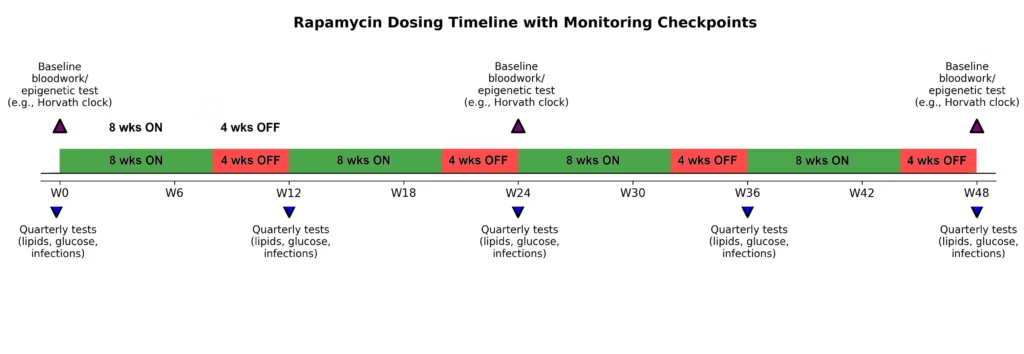
Start low: 3-6mg weekly intermittent for potential benefits with reduced sides, per mouse/human analogs—always under medical supervision. Mouse studies favor late-life short bursts.
- Baseline bloodwork/epigenetic test (e.g., Horvath clock).
- Dose 5mg/week, 4-8 weeks on/4 off.
- Monitor lipids, glucose, infections quarterly.
- Retest clock after 6 months.
Experts like Kaeberlein advocate vet trials first. Personalize via genetics/lifestyle.
Conclusion
Rapamycin slows epigenetic clocks in models via mTOR but awaits human proof amid risks like infections. Preclinical wins, expert trials (TRIAD), and cautious users point to potential—balance with vigilance.
Explore safely at Rapashop.net: Quality sources, protocols, and longevity tools. Consult your doctor before starting.
Limited data; topical trials test it, but systemic reversal unproven.
Yes, mouse data shows lifespan gains with fewer sides.
Pan-tissue or DunedinPACE for pace; Horvath for tissues.
Healthspan hints yes; lifespan trials pending.
Typically yes, especially intermittent.
Rapashop is a customer-focused, Rapamycin supply service for your longevity journey.
We have a flat rate policy. What you see on the product pages is what you are going to pay at the check-out: free shipping, no hidden fees, no nothing.
Resource links
Rapamycin: The Dimmer Switch Dilemma – Can a Transplant Drug Safely Slow Human Aging?
Topical-RAPA Use in Inflammation Reversal and Re-setting the Epigenetic Clock
Can Rapamycin Slow Aging in Dogs? New Research Shows Promise
Intermittent Administration of Rapamycin Extends the Life Span of Female C57BL/6J Mice
Effects of rapamycin on chromatin – implications for ageing and tumour suppression
DNA methylation age analysis of rapamycin in common marmosets
Targeting ageing with rapamycin and its derivatives in humans: a systematic review
Rapamycin for longevity: the pros, the cons, and future perspectives
Weighing the Anti-Aging Benefits of Rapamycin Against Possible Side Effects
Rapamycin for longevity: opinion article
Longevity Expert Explains How Bryan Johnson Has Not Reduced His Pace of Aging by 31 Years